Last chance to claim for the Animal Health & Welfare Pathway
The funding for the Animal Health and Welfare Pathway comes to an end in June 2027, but there is still time to claim for a Health Plan AND follow-up testing!
For beef cattle this means:
- £647 for health plan + BVD check test
- £954 (PI hunt) or £258 for follow-up BVD testing
For sheep this means:
- £574 for health plan + drench check
- £658 for endemic disease testing
Give us a call to discuss the pathway today!

Annual Red Tractor Health Plans
We will now be encouraging Red Tractor Health Plans to be carried out annually. Paperwork will be emailed out to you in advance of your review date, and prompt return of your health plan data within 2 weeks will result in a 10% discount on fees!
This will help to ensure that your farm is reviewed annually as per Red Tractor requirements, rather than every 18 months, and that problems don’t slip through the net.
It will also avoid the rush when the inspection notification arrives!
Anaemia in Camelids
Anaemia
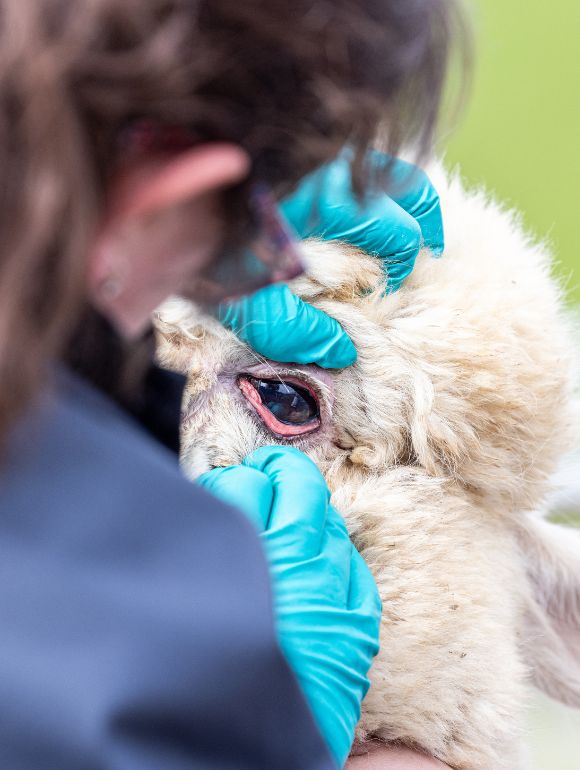
Anaemia is a common clinical presentation in alpacas. Anaemia can be assessed by checking eye membrane colour regularly. We would recommend checking eye colour at least monthly, but with increased frequence during high-risk periods.
The most common cause of Anaemia in camelids is Haemonchus (barber pole worm) but this isn’t the only cause.
Haemonchus contortus
Haemonchus contortus, also known as Barber’s pole worm, lives in the C3 and feeds on blood. Each worm can ingest up to 0.05ml/day so an alpaca with 5000 worms may lose 250mls blood daily. Each adult female worm can produce 5000-15,000 eggs so high levels of infection and blood loss can happen quickly. A dry spell followed by warm, wet weather creates perfect conditions for a sudden surge in Haemonchus. Weekly eye membrane checks can help pick up affected animals so treatment can be started as early as possible. Larvae can suck enough blood to cause disease, which means that worm egg counts can be negative as adults have not developed yet to produce eggs.
Treatment requires an appropriate anthelmintic, and in some cases blood transfusions to help replace blood lost.
Prevention is the best cure – regularly poo picking will reduce eggs on the pasture. Eggs hatch every 3-5 days, therefore poo picking at least every 3 days is important to reduce larvae. Everyday poo picking would reduce this further; the more you pick, the less there is to find!
Mycoplasma
Mycoplasma haemolamae is a bacterium which attaches to the red blood cells of camelids. The majority of alpacas infected with this bacteria show no signs of infection. However if your animal becomes immunocompromised through other diseases, or is stressed from a move, birthing, weaning, shearing or through other environmental changes (like extreme heat), MH can rear its ugly head.
Quite often we see and treat alpacas with Haemonchus which don’t respond fully to treatment. In these cases, Mycoplasma is then often subsequently found. There is no cure, but treatment can be given to suppress it to a more controlled level.
The exact mode of transmission is not fully understood, but is generally believed to occur through:
- Blood transfer: Contaminated needles, surgical equipment, or shared shearing tools.
- Vector-borne: Potential transmission by arthropods such as biting flies, fleas, or ticks.
- Vertical transmission: In utero transmission from dam to cria can occur
Therefore it is very important to use fresh needles for every animal when vaccinating and injecting all drugs.
C3 Ulcers
Camelids have a third stomach compartment (C3), 80% of which is non-glandular and the distal 20% of which is glandular and secretes acid. There is a distinct line of demarcation between the two zones, which is where ulcers tend to form. Ulcers vary in size, number and depth.
Camelids with C3 ulceration may present with vague signs of colic. Weanlings, more than any other group, may regurgitate frequently with excessive salivation. It is not easy to definitively diagnose these ulcers, since it is not possible to pass an endoscope all the way to C3. Thickening and oedema in the wall of C3 on ultrasound is suggestive of ulceration. Treatment involves suppressing the stomach acid to allow C3 to recover. Unfortunately we can get fully perforated ulcers which leads to fatal peritonitis.
Chronic Anaemia
Any illness which suppresses the bone marrow or spleen will affect the production of red blood cells. Alpacas can get blood cancers such as lymphoma. Its always worth getting those not responding to typical treatments checked by us.
Worm Egg Count Machine: UPDATE!
We have officially named our new Ovacyte machine: Scooby Poo!
Thank you to everyone who came to our Christmas Market event and took part in the naming competition.
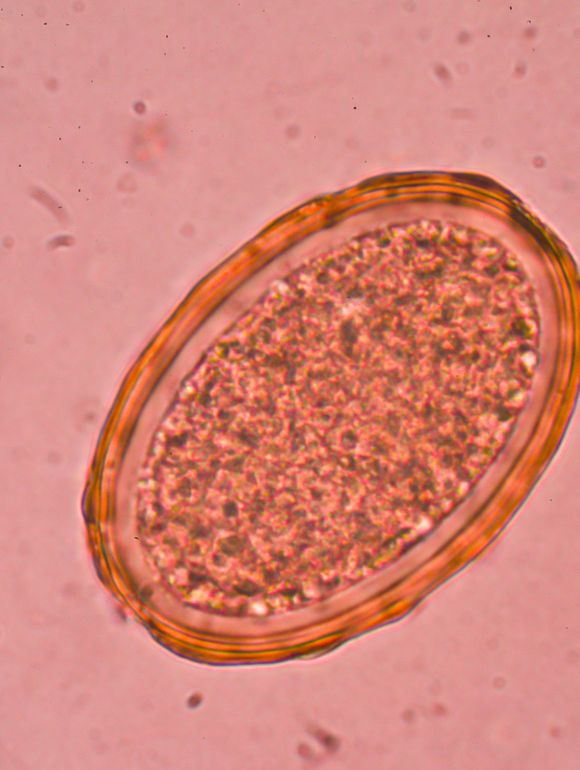
Scooby Poo is used regularly for worm egg counts and can provide highly sensitive detection of eggs in faecal samples. Last year we offered farms their 10th worm egg count free of charge, and we will be repeating this offer for 2026!
The Ovacyte machine also allows us to offer further speciation of parasites. It is already able to speciate for Haemonchus, making this test more accessible due to lower costs and quicker turnaround.
Coccidia Speciation
Coccidia are parasites that can cause diarrhoea and weight loss in young animals, usually 1-2 months old. Some species are pathogenic whereas others cause no disease; it is not possible to differentiate them on normal worm egg counts, making treatment decisions difficult.
Our Ovacyte machine uses AI technology (artificial intelligence- not insemination!) to identify which oocysts are pathogenic, which will allow us to determine when treatment is likely to be beneficial.
Routine samples can be dropped off at our Weedon or Burcote Road clinics, we kindly ask you contact Debbie in our farm office so we know when they are arriving.
Are you EID ready?
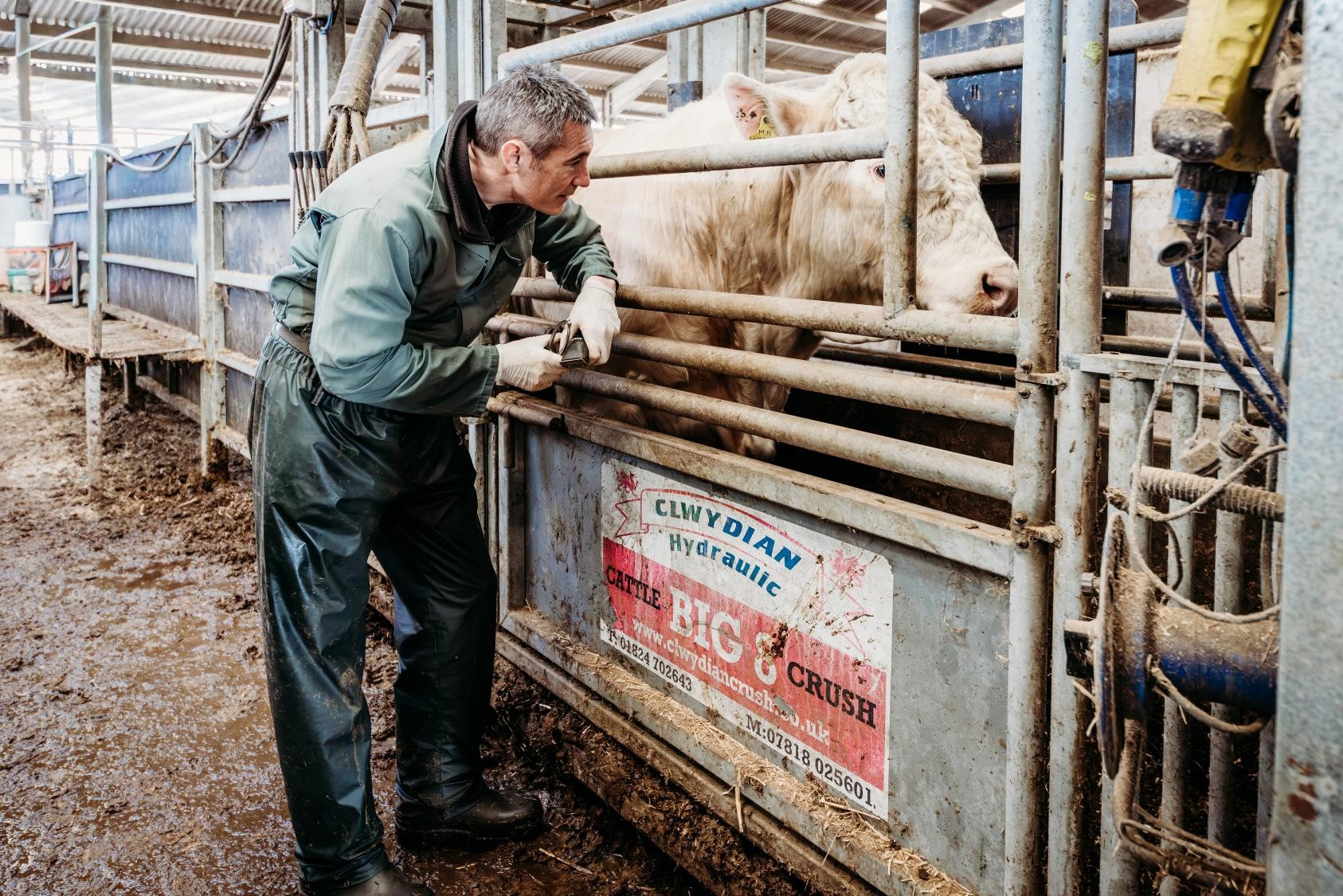
Electronic identification (EID) ear tags become compulsory for all calves born from January 2027. The tags, which contain a microchip which stores a unique 15-digit animal identification number, can be read from up to 1m away, in the dark or when dirty via an EID reader. The scheme is designed to help improve biosecurity by allowing faster, more accurate tracing of livestock movements in the event of a disease outbreak. The tags will need to be applied as one of the two required ear tags from the new year onwards. Cattle already tagged will not need to be re-tagged, the scheme only applies to newborns.
Whilst we are on the topic of tagging calves, especially now they are out at grass – please remember that calves need to be registered with BCMS by the day the calf is 27 days old. Registering after this deadline is a more complicated process requiring DNA testing of the dam and calf to prove parentage so there is definitely an incentive to getting everyone registered in time.

Acupuncture
What is Acupuncture?
According to The Association of British Veterinary Acupuncturists (ABVA), acupuncture has evolved
from the ancient art of placing needles into special locations on the body to alleviate pain, improve recovery rates and increase resistance to disease.
It has been practiced by the Chinese and other Eastern cultures for thousands of years and may be used to treat a wide variety of illnesses.
What happens during treatment?
Fine needles are inserted into your pet’s body at specific points. These needles are then moved by the Vet.
Is acupuncture safe?
Acupuncture is extremely safe when practiced correctly. Under UK law, animal acupuncture can only be administered by an appropriately qualified Veterinary Surgeon. The monitoring and removal of acupuncture needles may be undertaken by a Registered Veterinary Nurse.
How many treatments will my pet need?
Most conditions can benefit from 3-5 treatments delivered at weekly intervals, with progressively wider intervals between treatments as soon as a significant improvement is noted.
How long does a typical treatment last?
Sessions typically take between 25-35 minutes from start to finish.
Pets that are aggressive or fearful can create a safety issue for the Vet administering acupuncture. It’s also not possible to sedate animals so they can receive acupuncture treatment. It is for these reasons we unfortunately have to decline administering acupuncture therapy to these pets. Our team will be happy to advise on other treatment options which are available.
What are the costs involved?
First session £80.00 (inc vat)
Follow up session £60.00 (inc vat)
A course of 4 x sessions booked in advance is £200.00 (inc vat)
How to enquire
If your pet has a condition that you believe could benefit from acupuncture, please speak to our team.
Our experienced vet Sarah Riconda performs the treatment, she is happy to discuss your pets individual requirements before booking.
We can also provide this treatment to pets registered at other vet surgeries, we’re also happy to receive external referrals from other practices.

XL Bully Dogs
At the end of 2023 XL Bully type dogs were added to the list of banned breeds under the Dangerous Dogs Act. This does not mean that all existing XL Bully type dogs will need to be euthanised, but it does mean that there is now strict legislation involved.
Does my dog count as an XL Bully?
Unfortunately, XL Bullys have developed as a hybrid of several other breeds and so it is tricky to decide what is and what isn’t an XL Bully type. The government are making the decision based on a series of measurements and features. The list is not definitive, and many Staffordshire Bull Terriers, American Bulldogs, Mastiffs and their crosses may meet the criteria. If your dog meets the majority of the criteria they are likely to be covered by the ban unless are an ‘easily recognised Kennel Club breed’.
https://www.gov.uk/government/publications/official-definition-of-an-xl-bully-dog
If in doubt, current legal advice is currently to assume your dog is covered by the legislation and then appeal later when the appeals process is launched. If you chance it you could end up with your dog being seized and held in kennels for 6 months plus without being able to visit and the decision not to register them could be held against you in your court case.
What do I need to do?
You will not be able to sell, abandon, give away or breed an XL Bully type dog after 31st December 2023
All XL Bully types will need to have a certificate of exemption by 1st February 2024 (applied for from the government). The cost is £92.40
https://www.gov.uk/guidance/apply-for-a-certificate-of-exemption-to-keep-an-xl-bully-dog
XL Bully types must be microchipped, kept on a lead and muzzled at all times in public (including in the car)
They must be kept in an escape proof area
Dog must have liability insurance (included in most existing insurance plans or The Dogs Trust offer a policy)
XL Bully types must be neutered. If they will turn 1 before 31st January 2024 this will need to be performed by 30th June 2024. Younger dogs will have until the end of 2024
XL Bully types can not be left with someone else for more than 30 days
How can we help?
Veterinary Surgeons or Registered Veterinary Nurses do not have the authority to say whether your dog is or is not an XL Bully Type.
We can however:
- Help you understand the terminology and where to measure your dog
- Check your dog’s microchip number and that details are up-to-date
- Point you in the direction of good muzzle training (being offered for free by some trainers currently)
- Neuter your dog
- Complete proof of neutering paperwork
- Continue to provide veterinary care to your dog. XL Bully Types will always be welcome at Towcester Vets
- Direct you to further resources if you require them
We understand that this is a hugely stressful time for owners of XL Bully types or similar breed dogs.
Please contact us if we can support you at all.