Towcester Equine Vets Worming Options
Worms in horses can cause serious problems, including (amongst others) diarrhoea, colic and weight loss. Now is the time to be thinking about your equine worming schedule. To help you understand why, we asked Abi Jennings, one of our equine vets, to explain a little bit about the Towcester Equine Vets worming programme.
Review your current equine worming programme
Taking a little time to review your worming programme will almost always pay dividends, as a seasonal check will ensure that you are using the most suitable equine worming products at the most suitable time of year.
Adopt a seasonally targeted approach
A seasonally targeted approach will be beneficial for every horse, pony and donkey because Anthelmintic (de-wormer) resistance is an ever-present threat that we are now encountering on a more frequent basis. Routine use of de-wormers is now an out-dated and irresponsible approach. Whilst targeted use of the right wormer at the right time is now at the forefront of the decision-making process we go through.
Towcester Equine Vets Original Worming Programme
Towcester Equine Vets now recommend using a targeted deworming programme. We only treat those horses that are identified as requiring deworming, through the use of faecal worm egg counts (WEC) and other diagnostic testing. This approach can help reduce the use of drugs by up to 80%.
Whether it be for your yard or for individual horses, our worming programme can be tailored to best suit your needs. We have developed the programme to make monitoring and managing your horse’s worm burden as easy and simple as possible. The programme is made up of four elements:
1. Three faecal worm egg counts
These should be performed every 2-3 months throughout the Spring and Summer months, e.g. March, June, September.
Horses only need to be wormed if high worm egg burdens are identified – saving money on wormers and reducing resistance to the drugs we have available. Results are usually reported via email the next day, along with veterinary advice on the best wormer to use, if needed.
2. Equest Pramox
To be used in late autumn, targeting tapeworm and encysted redworm (larval stages) that cannot be measured by faecal worm egg counts. Young horses, those with a history of a high tapeworm burden or colic may also require worming for tapeworm in Spring.
3. Equisal Tapeworm Saliva Test
To be used in late Spring, this is an easy to perform test that owners are able to do themselves. Samples are analysed by an external laboratory to identify those horses with a higher tapeworm burden despite deworming over Winter, so they can be treated again if required. It is often useful to combine this with a faecal worm egg count at the same time, so the most suitable product can be selected depending on both results.
4. Use of a worming year planner
To help you keep track of when faecal worm egg counts and worming treatments are due.
Annual cost: £81.60 per horse inc VAT
NEW FOR 2025 – The ‘Wormer-Free’ Monitoring Programme
Alongside our existing worming programme, we are pleased to introduce a wormer-free monitoring programme. We aim to help you monitor your horse or pony’s worm burden and manage them appropriately to enable the lowest use of drugs possible. Whilst maintaining your horse’s health, this programme follows latest veterinary advice to promote responsible use of wormers and reduce the risk of resistance developing.
The wormer-free monitoring programme includes:
• Three faecal worm egg counts
Monitoring of adult roundworms and redworms every 2-3 months throughout the Spring and Summer grazing season. Collect your faecal samples and either drop them into our Plum Park or Onley clinic, or post to us. Results will be emailed within 24 hours, along with veterinary advice on whether to worm and what product is most suitable.
• Annual Equisal saliva test kit
Monitoring of tapeworm burden performed at the end of the grazing season in Autumn. This is performed by owners and sent off to the lab.
• Annual blood test for redworms
Monitoring of juvenile, encysted redworm burden via a blood test performed by the vet in late Autumn.
Alongside testing, veterinary advice is always available to help you manage your horses and aim to maintain a completely drug-free worm management strategy.
The package doesn’t include:
• Any wormers required depending on the results of faecal worm egg counts.
• A repeat Equisal saliva test to use in Spring if required (depending on Autumn result).
• Visit charges to perform the redworm blood test; this can be done on our discounted zone visits, at the clinic, or at your yard on a day or time of your choice with a normal visit fee.
Annual cost: £129.60 per horse inc VAT
This programme is great for low-risk horses such as those in a stable herd, with good pasture management and no history of worm-related colic. We recommend speaking to one of our vets if your horse is under 4 years of age as this may not be the most suitable programme for them; our targeted worming programme remains available for £81.60.
Find out more
If you would like more information on our programmes available or want to pick up a ‘Worming Pack’ today, please contact the clinic on 01327 811007 or 01788 52300.

Protect your horse against sycamore poisoning (Atypical Myopathy) this autumn
One of Towcester’s equine vets, Gwen Davies, shares some important seasonal information on Atypical Myopathy. Discover what it is and what you need to do to prevent or deal with the symptoms of this life threating condition.
What is Atypical Myopathy?
Atypical Myopathy, also referred to as Seasonal Pasture Myopathy, is a rare but often fatal muscular condition seen in horses and ponies in the UK. It is caused by ingestion of sycamore seeds, seedlings or leaves, which contain the toxin Hypoglycin A (HGA).
Atypical myopathy It is most commonly seen in horses grazing bare pasture in the autumn when the sycamore seeds have dropped, or in the spring when the seedlings are growing. Some individuals seem to be more susceptible than others, especially young adults, but several horses in the same group grazing the same pasture can be affected.
If you suspect your horse has ingested sycamore seeds/leaves or if you spot any of the clinical signs below, please contact our vets immediately.
What are the symptoms of Atypical Myopathy (Sycamore Poisoning)?
- Weakness and difficulty walking or even standing
- Stiffness
- Muscle tremors
- Profuse sweating
- High heart rate in the absence of exercise
- Difficulty breathing
- Depression and low head carriage
- Brown or dark red urine
Can we treat Atypical Myopathy?
Affected horses can deteriorate within hours, and prognosis is generally poor. For this reason, veterinary assistance must be sought urgently for suspected cases.
Intensive treatment is critical to maximising the chances of survival, including intravenous fluid therapy, glucose and vitamin supplementation, pain relief and nursing care.
Horses that remain standing, eating and survive for 10 days are more likely to recover.
How can you prevent Atypical Myopathy?
The safest method of prevention is to remove toxin-containing seeds and seedlings from the environment to stop ingestion. During the autumn months clear sycamore seeds from pastures or fence off areas where sycamore seeds have fallen. Be aware that even fields without sycamore trees can still have seeds blown over. During spring, the most up to date recommendation is to mow and dispose of all sycamore seedlings. Some herbicides are available on the market to kill sycamore seedlings, but it has been found that the toxin can remain in dead seedlings for many months, so these must still be disposed of appropriately.
Other ways to reduce the risk include supplementation of forage if the pasture is bare, ideally feeding hay/haylage off the ground (using mats, tubs or feeders), and limiting the grazing time to less than 6 hours per day.
For more information or if you have any concerns reading sycamore seed ingestion, please don’t hesitate to call the practice on 01327 811 007 and speak with one of our veterinary team.
Gwen Davies BVMedSci BVM BVS MRCVS is one of Towcester’s team of equine vets, you can find out more about Gwen and our other equine vets on our Team pages.
The Role of an RVN/SVN at Towcester Equine Vets
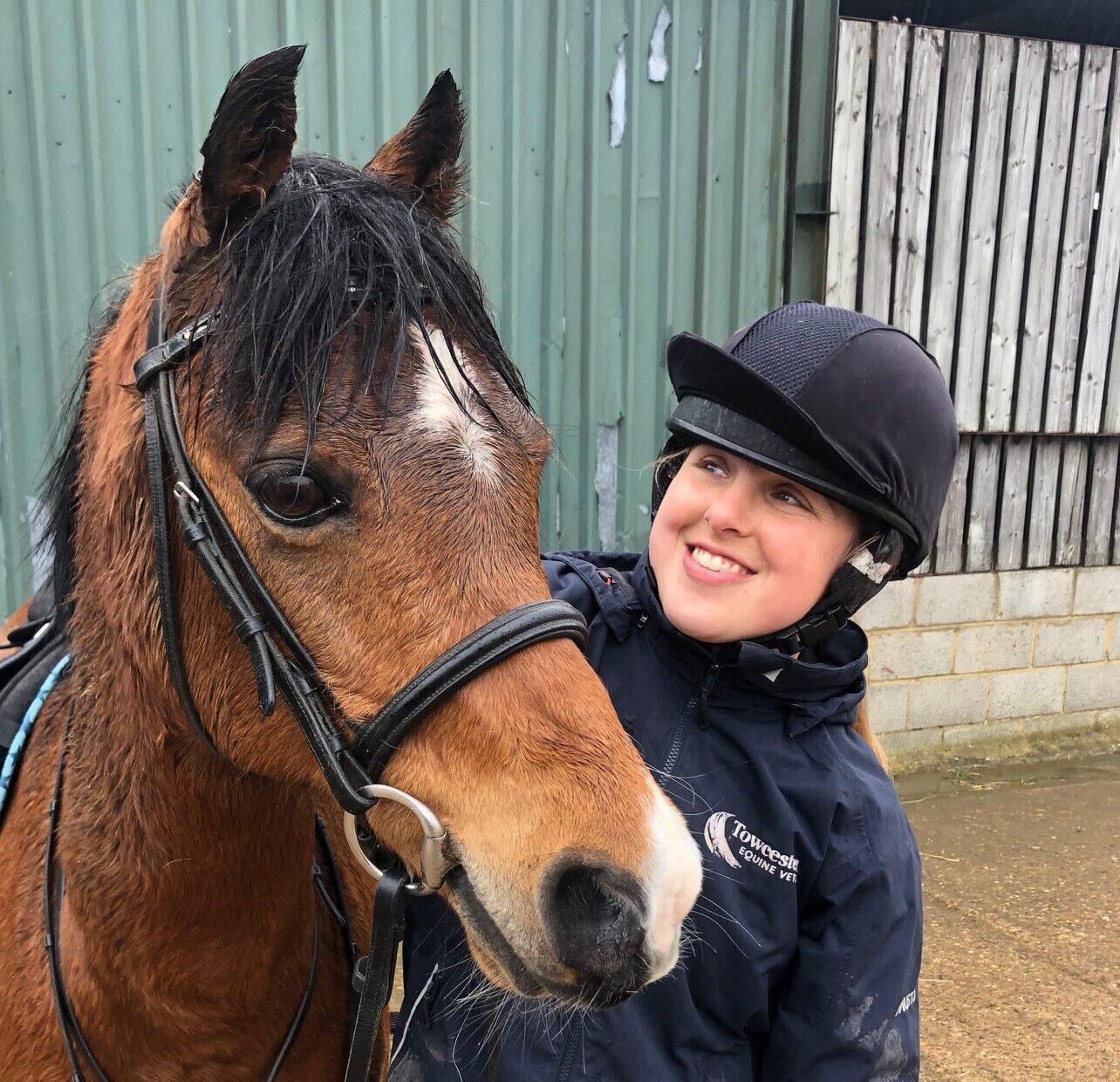
Registered Veterinary Nurses (RVNs) and student nurses play a vital role in providing your horse or pony with outstanding care at Towcester Equine Vets. Whilst they are instrumental in caring for our hospitalised patients at the clinic and assisting our vets on the road, they are also able to use their valuable knowledge of patient care to provide several veterinary services. With this being said, you may start to see them out and about on visits to your yard.
RVNs spend 3-4 years training, either whilst working as Student Veterinary Nurse (SVNs) or on a placement year from University during their degree.
Here at Towcester Equine Vets, we have a range of experienced nurses who are either fully qualified or currently studying towards their exams.
Each member plays a vital role in the care of patients both in and out of the clinic.
Under the Veterinary Surgeons Act 1966, registered nurses are permitted to carry out many roles within the clinic and out on visits such as:
- Bandage changes following injury or surgery
- Suture removal
- Post operative home care such as help with administering medication and offering help and advice with box rest.
- Taking blood samples on the request of a vet.
- Taking samples such as hair plucks and skin scrapes.
- Medication administration at the request of a vet such as intravenous antibiotics or sedation when required g. clipping, dentists, farrier, travelling.
- Taking radiographs at the request of a vet. This can be following a lameness investigation, acquiring images for the farrier for remedial shoeing or laminitis. Whilst the nurses can take the images, they are unable to make a diagnosis, a vet in charge of the case will see these later on in the day.
- Laser and shockwave therapy, which would have been recommended by the vet beforehand.
- Nursing clinics covering various areas:
- Biosecurity advice and assessments
- EMS and weight clinics
- Equipment demonstrations.
A student vet nurse would be able to do all the above in clinic under the supervision of a Veterinary Surgeon.
A Vet Technician assists a vet directly with any procedures in clinic and out on the road, they do not work independently like a RVN would.
All the nurses have different roles within the equine team, and these roles reflect their individual strengths and areas of interest:
Chloe Goddard RVN PgCertAVN (Clinical Lead) – theatre and intensive care
Georgina Moses (Logistical Lead) – managing equipment & organising the nurses’ diary. Breeding services including artificial insemination, semen collections.
Emma Chapple-Hyam RVN – lameness and poor performance exams including riding assessment if needed. Laboratory work.
Becky Price SVN – inpatient care, lameness and poor performance exams including riding assessment if needed.
Kelle King – lameness and poor performance exams including riding assessment if needed.
Charlie Coyle BSc (Hons) MSc MNAVP – Veterinary physiotherapist, especially DSP surgery and rehabilitation.
Otti Riganti – assistant to Vet Andy Hayes
It is important to note that the nurses are unable to carry out certain procedures such as:
- Appointments where a diagnosis is required
- Microchipping and passport certification
- Dentistry
- Medicating joints
- Vaccinations (due to the need to be certified by a vet)
The role of the ambulatory Equine Nurse (RVN) is very different to that of the Equine Veterinary Surgeon. Equine nurses are not able to make a diagnosis, however they are able to obtain the vital information such as samples, radiographs, and assessments that in turn provide our vets with the information that they need to support our patients as well as advising, teaching and supporting owners through their horses’ conditions.
If you would like to speak with any of our equine nurses please contact our team.
Author Emma Chapple-Hyam RVN

Death in Lambs
Over the last few weeks we have seen an increase in sudden death cases in lambs. We would always advise post-mortems to investigate these cases. There are a few options available; our farm vets can carry out a post-mortem and send any samples away to the laboratory, or cases can go to a APHA subsided service.. With the latter option a free carcass collection is often available depending on your postcode. All supplementary testing is included in the price and a full comprehensive report is received making it excellent value from money.
The most common causes of sudden death are parasites, Clostridial disease, and Pasteurella. In our Spring Newsletter we told you about Haemonchus Contortus the barbers pole worm which lives in the abomasum of ruminants feeding on their blood. We have seen an increase of cases this year – identified on post-mortems, clinical signs and worm egg counts. Usually these cases will have reduced by this time of year but we are still seeing a high number of cases due to the mild wet weather. Please remain vigilant; unlike normal worms Haemonchus does not cause dirty back ends or loss of condition, you will instead see pale membranes, lethargy, bottle jaw and sudden deaths.
Please call our farm team if you have any concerns regarding your flock.

Flock Health Club 2025
Our sheep flock health club has enjoyed meeting this year to discuss our flocks, reflect on how things are going and plan for the coming season.
We are a friendly group, led by farm vets, which aims to share knowledge and improve health and productivity.
This year we have focussed on:
- Lambing strategies
- Benchmarking with AHDB Farmbench
- Making the most of the Animal Health and Welfare Pathway
- Parasite control strategies
- Faecal worm egg counts
- Lameness
Next year we have plans to cover topics including selective breeding, sustainable farming strategies, and overall flock health.
Open for new members from January 2025.
Please ring the surgery or email admin@towcestervets.co.uk to find out more.

Bluetongue
Bluetongue (BTV) is a non-contagious, infectious viral disease transmitted only by biting midges, which affects all ruminants (e.g. sheep, cattle, goats and deer) and camelids. The latest strain to affect the UK is BTV-3 which has been an issue on mainland Europe since 2023, the first UK case was reported in November 2023 with a lull in cases over the winter and further cases identified from August 2024.
BTV is spread by adult-infected midges biting a susceptible animal. An uninfected adult midge bites an infected animal, taking in blood and the virus. The virus replicates within the insect when average daily temperature exceeds 15oC and moves to the salivary glands. The infected adult midge then bites an uninfected ruminant, transmitting the virus.
A single bite from a single infected midge is sufficient to transmit the virus. This ruminant animal will be infectious within 2-4 days. Additional bites will not result in greater levels of infection or worse clinical signs.
Generally, vets in Europe and those seeing cases in the UK are reporting that sheep appear to be more severely affected than other species, with clinical signs in cattle being particularly subtle.
| Sheep | Cattle | |
| Lethargy, reluctance to move | x | |
| Crusty erosions around the nostrils and on the muzzle | x | x |
| Discharge of mucus and drooling from mouth and nose | x | Nasal discharge |
| Swelling of the muzzle, face and above the hoof | x | |
| Reddening of the skin above the hoof | x | x |
| Redness of the mouth, eyes, nose | x | x |
| Breathing problems | x | |
| Erosions on the teats | x | x (possibly just reddening) |
| Low milk yield | x |
Calves/lambs can be infected with bluetongue before birth if the mother is infected while pregnant. Signs of infection include being born small, weak, deformed or blind or death within a few days of birth or abortions.
You can check whether you are in the current BTV Restricted Zone (RZ) by searching for the BTV Interactive Map online. Movements of animals are allowed within the RZ under a general movement license, but there is a risk movement will cause further spread of the virus by unwittingly moving infected animals or transporting infected midges to a new area. Please take precautions when moving animals – checking your stock for possible signs of disease and spraying the inside of vehicles with an insecticide approved for use against flying insects prior to loading. Avoid moving during dawn and dusk when midge biting activity is highest. Please only move animals when absolutely necessary. Animals can also be moved from a free area into the RZ. Movements of animals out of the RZ to live requires a specific license and testing that must be applied for from APHA in advance – there is no guarantee these licenses will be granted.
Total elimination of midges on farm is not feasible, reducing the risk is therefore the aim. Midges are not able to fly in high winds or rain, using the windiest location for stock can help reduce midge exposure. Midges breed in damp soils with high organic content, such as muckheaps – keeping these distant from susceptible stock and housing may reduce biting frequency and transmission. Whilst topical insecticides do kill insects, there is no evidence that use of insecticides on animals reduces bluetongue virus transmission in the field. These products have a poor retention/efficacy time (especially in the rain) so would require frequent repeat administration.
As you know there are now 3 vaccines available Bultavo-3, Bluevac-3 and Syvazul BTV – originally these were only freely available to those in the high-risk counties but this has now been extended to the whole of England. If you wish to vaccinate you will need to obtain a general license, follow strict rules regarding recording which animals receive the vaccine and fill in a form within 48 hours of vaccinating. The vaccines are only licensed in cattle and sheep but we have guidance from the camelid and goat vet societies with best advice for these species. Please be aware these vaccines do not claim to prevent infection, but to reduce viraemia and clinical signs.
Please contact our farm team if you wish to discuss any concerns or you require further information on Bluetongue.

Winter Care for Senior Rabbits: Arthritis, Spondylosis & More
Rabbits are elite hiders of pain thanks to their built-in ‘predator protection’ system. In the wild, showing pain and weakness would make them vulnerable to predators so it’s no surprise they’d want to keep their pain under wraps. Towcester Vets’ nursing team recommend getting your older rabbit’s health checked regularly to uncover any problems that could be underlying.
It’s important to make sure your senior rabbit stays warm over the colder months to keep them happy and healthy. Besides exacerbating senior ailments, getting too cold can be dangerous for rabbits. This may involve bringing them indoors, providing pet-safe heat pads or ensuring accommodation is well insulated.
Book a senior rabbit health check
Understanding the needs of senior rabbits
What age is a rabbit considered ‘old’ or a senior?
Small rabbit breeds generally become seniors at age 8, medium breeds at 6, and large breeds are considered seniors at just 4 years of age.
Our veterinary nursing team in Towcester have put together their advice for what can hinder your rabbit’s senior years and how you can help them:
Weight & Diet: Older rabbits may be less active and either gain (if eating the same amount) or lose (tyipcally if they have a health problem) weight. Although hay should still form the vast majority of your senior rabbit’s diet, alongside some greens, an egg cup full of pellets formulated for senior rabbits can help support older bunnies. Weigh your senior rabbit regularly and contact our team at Towcester Vets if you notice any unexpected changes, or if you’d like tailored nutrition advice.
Dental Care: Many older rabbits develop dental disease, and malocclusion (misalignment of the teeth and the way the upper and lower teeth fit together when the mouth is closed) can happen at any time, potentially becoming an emergency if your rabbit struggles to eat. Watch for signs like reduced appetite and droppings, favouring certain foods, drooling, weight loss, or swellings around the mouth and jaw. In an emergency, contact our vets in Towcester on 01327 350239.
Arthritis & Spondylosis: These common conditions in senior rabbits often go undiagnosed without regular health checks. Slowing down isn’t just a sign of age – it could be due to these painful ailments.
- Arthritis in Rabbits: Primarily affects the joints, causing stiffness, difficulty hopping, reduced mobility, and reluctance to groom or move around.
- Spondylosis: A degenerative spinal condition in rabbits; may also lead to stiffness and reduced mobility, but can be more focused on back pain, difficulty posturing (like stretching), and sensitivity around the spine.
After diagnosis, treatment can help manage symptoms. Book a senior rabbit health check at Towcester Vets.
Grooming & Care: Older rabbits, especially those with arthritis, may struggle to groom themselves, particularly around their bottom. Regular checks and cleaning can help prevent flystrike, a serious issue. Handle them gently, as they may be in pain, and keep an eye on their claws, which may need more frequent trimming. Our nursing team are here to help with your rabbit’s care – get in touch.
Changes at Home: Towcester Vets’ nursing team advise that making some simple changes to your senior rabbit’s housing and your home could do wonders for their comfort and mobility:
- Ensure your rabbit’s sleepng quarters are in a warm area of your home away from drafts. If it gets too cold, our vet nurses in Towcester recommend wrapping the sides of the hutch in a duvet or blanket, ensuring it’s well-ventilated. You can also place a pet-safe microwaveable heating pad where your rabbit can’t chew it.
- Review your older rabbit’s accommodation – two-storey hutches with ramps can be problematic. Try reconfiguring and adding lower obstacles so your rabbit can still have fun.
- Use thick, absorbent bedding such as Vetbed, which will draw urine away from the body and provide padding to support changes in weight or hair loss.
- Place rubber-backed mats on laminate or wooden flooring for better grip where your rabbit hops around your house.
- Swap litter trays to low sided ones, or you can use plastic dog beds with a lower entrance so your rabbit can get in and out easier.
So, as the colder weather in Northamptonshire sets in, book your rabbit in for a senior health check with our friendly team to ensure they get any treatment they need.
If you’re concerned about your rabbit’s health, especially if their appetite has changed (this could be related to other health conditions and should be dealt with quickly), give us a call on 01327 350239 as soon as possible.
Book a senior rabbit health check

Ensuring Your Cat’s Night-time Safety in Northamptonshire
Cat safety is on every vet’s mind in Northamptonshire as the nights start to get darker much earlier. Sadly, this time of year often sees a rise in the number of cats brought to Towcester Veterinary Centre and other veterinary practices after being involved in road traffic accidents at night.
If your cat doesn’t return after a night of wandering, contact our team in Towcester by calling 01327 350239. Our veterinary nurses will check if a cat matching the description has been brought in.
Our team at Towcester Vets want cat owners to know that dark night safety for cats starts at home. To help you, our team have put together a checklist of things you can do to help your cat stay safe during autumn and winter nights in Northamptonshire, including:
- Ways to encourage your cat to stay indoors at night
- Making your cat more visible to drivers
- A cat microchipping reminder…
Download our Dark Night Cat Safety Checklist
Why do cats wander at night?
We asked our vets in Towcester to explain why cats like to wander at night, here is what they said: “Cats are naturally crepuscular, meaning they’re most active at dawn and dusk. Their heightened senses and excellent night vision make them feel comfortable exploring in low light. Instinctively, night-time roaming is linked to their hunting behaviour, as this is when prey is typically active. Additionally, the quiet and calm of night can make it more appealing for cats to patrol their territory, search for food, or simply satisfy their curiosity.”
Should you stop your cat from going out at night?
Our vets share that forcing your cat to stay in at night can cause stress and anxiety, as it disrupts their natural instincts to explore and hunt during their most active hours. That said, when temperatures are exceptionally low or the weather is deemed a “risk to life” in Northamptonshire, it can be prudent to encourage them to stay indoors.
But what can you do to help them stay safe?
- Download our handy checklist with tips for cat safety at night
- Microchip your cat as a priority
Why is cat microchipping important?
At Towcester Vets, we know that cat microchipping gives your cat the best chance of being reunited with you quickly, should they have an accident or get lost at night – plus, it’s now a legal requirement if you live in England. Contact us now to get your cat microchipped or check the details on their existing chip.
Already microchipped your cat? Great! However, too many pet owners forget to update the information on the microchip database when they move house or change their phone number, making it just as hard for vets to contact them, as when there was no microchip at all. Do you need to update your details?
Not being able to locate the owner of a cat that has been found wandering or needs urgent medical attention, is something we absolutely dread at Towcester Vets.
If your cat needs microchipping, or they are missing, get in touch as soon as possible.
Before you go, here’s a little reminder to download our handy Cat Safety Checklist.

Veterinary Surgeon Holly discusses Mud Fever
Veterinary Surgeon Holly Gimmler, discusses the symptoms of Mud Fever (Pastern Dermatitis), how to treat it and importantly how to prevent it.
Mud Fever also referred to as Pastern Dermatitis, is a common non-contagious skin condition which typically affects the lower limbs of horses following exposure to wet, muddy conditions. Horses can suffer in summer but as the name suggests, it is more common during the winter months. Mud Fever occurs where a breach in the skin allows bacteria to enter, causing a painful flare up. Cuts or mite damage to the skin may also exacerbate the onset of the condition allowing the bacterial infection to establish. Mud Fever can be extremely frustrating to treat and action is required quickly to get things under control.
If you are a horse owner then learning how to prevent or identify and treat Mud Fever early, will save you time and stress. It will also save affected horses considerable discomfort.
Identifying the symptoms of Mud Fever
Mud fever is commonly seen at the back of the pastern, between the hoof and fetlock, but some scabs may spread higher up the legs. Unpigmented skin on white legs is more susceptible. Typically, affected areas appear as crusty scabs, areas of matted hair or loss of hair, with raw skin underneath. In severe stages there may be a cream-yellow discharge oozing from the area. This can develop into heat and swelling in the lower limb which may be painful.
Mud fever can also occur on other areas of the body where it is called “Rain Scald”.
Treatment of Mud Fever
What can you do if you think your horse has Mud Fever? Well, there are a number of actions you can take before deciding if you need to call our equine vets. Firstly, bring your horse out of wet, muddy or dirty conditions. Clean the affected area daily and keep it dry. If your horse has feathers, these can be clipped to reduce wet contact time on the skin.
If your horse is suffering from more severe lesions, please contact our equine vets for further advice. They may prescribe:
- A gentle shampoo
- A steroid based cream which is applied to the skin
- If mites or fungal infection are implicated, we can treat either or both
- Pain relief and anti-inflammatories
- In complicated cases, your vet may take a swab for culture and sensitivity in order to select the appropriate course of antibiotics
How to prevent Mud Fever
- Limit the amount of time spent standing in wet conditions or mud. This may involve rotating pasture or stabling your horse to avoid muddy exposure
- Reduce the risk of pastern injury where possible e.g., overreach boots
- Barrier creams can be helpful
- Always dry your horse’s legs
Most of all, please do inspect your horse’s legs daily to identify problems. This is by far the best way to save you all a lot of time, stress and discomfort.
For more information or if you have any concerns regarding the management of pastern dermatitis, please call one of our equine vet team.
About the author
Holly Gimmler BVSc MRCVS has been at Towcester Equine Vets since July 2021 after graduating from the University of Liverpool. She enjoys all aspects of equine veterinary work, you may meet her working with the team at the Paulerspury clinic near Towcester or out on the road. Holly particularly enjoys lameness investigations and medical cases.
Holly is a very active person and a talented long distance runner, she is often accompanied on her daily travels by her gorgeous Saluki named Figgy.
Colic, a cause for concern!
Colic is one of the most common equine emergencies we see at Towcester Equine Vets. It is not a disease, rather colic describes general abdominal pain and discomfort. There are many ‘types’ of colic, which means there are a lot of disease processes (and changes that can occur in the gastrointestinal tract) that cause abdominal pain. Any horse displaying signs of colic is a cause for concern. We recommended that you contact your vet if you suspect colic, as early recognition and treatment is the key to successfully dealing with the condition.
What are the signs of colic in horses?
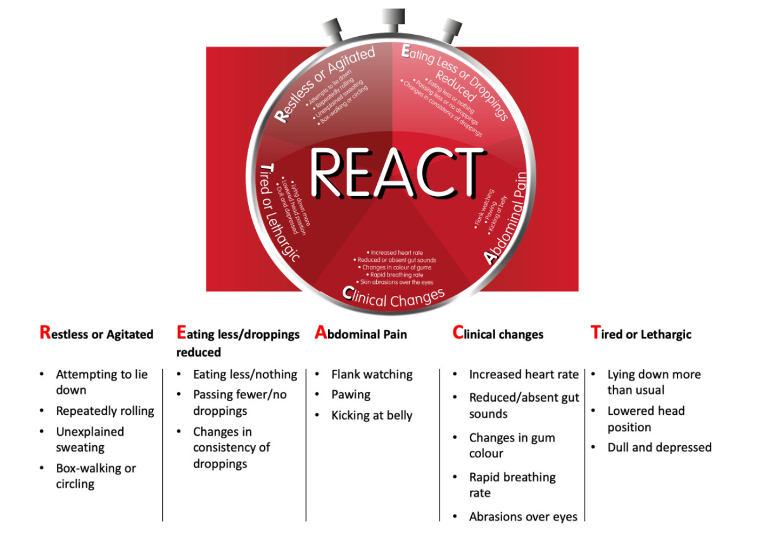
The signs a horse can exhibit when experiencing abdominal pain are broad. To help owners remember how to recognise key signs exhibited by a horse when they have colic, the British Horse Society created the REACT mnemonic:
A couple of things that are worth bearing in mind are that:
- Not all horses will display all the signs listed above.
- The severity of colic signs can depend on the individual horse and the severity of the disease process; levels of pain do not always correlate with level of severity.
How do I reduce the risk of colic?
Colic can occur year-round in both stabled horses and those out at grass. Although the causes are often unknown, there are a few key risk factors that can contribute to the onset of colic. Therefore, there are some simple steps that all owners can take to help reduce the risk of a colic episode.
Feed and water intake
- A horse’s diet should mostly be composed of forage, such as hay or grass. Horses are hindgut fermenters so feeding forage is essential to maintain a healthy gut and normal gut motility.
- Introduce feed changes slowly. A horse’s gastrointestinal tract is home to millions of bacteria; introducing new feeds or new feeding routines slowly allows these “good” bacteria a chance to adapt.
- Ensure your horse has access to a constant supply of clean fresh drinking water. This is especially important during winter when water supplies can freeze over, so check your water supplies and remove any ice twice daily.
- Ensure your horse is not turned out onto sandy surfaces to graze. Ingested sand particles can accumulate in the gastrointestinal tract, causing abrasion and discomfort.
- Do not feed unsoaked sugar beet or mash like feeds which expand with water. If these are fed unsoaked they can form a dry ball of solid material in the gut, which can lead to impactions.
Routine healthcare
- Maintain a worming protocol. A high parasite burden can cause significant damage to the gastrointestinal tract. We recommend using faecal worm egg counts to monitor your horse’s parasite burden and using the appropriate wormer when needed.
- Regular dental check-ups ensure that your horse can chew properly. Inability to fully chew food can lead to horses swallowing larger portions of feed and increases the risk of impaction colic.
Seasonal changes
- Abundant growth of lush grass in spring and autumn can lead to horses consuming large quantities quickly. This undergoes rapid fermentation in the gastrointestinal tract, leading to gassy or spasmodic colic episodes. Restricted grazing is recommended during these times to prevent horses from gorging on fresh grass.
- In the winter, the colder weather impacts a horse’s access to forage and fresh water, as water sources may freeze, and grazing may be sparse. Ensure supplementary forage and fresh water is always available.
- In the winter, many horses’ routines change too; they go from being out at pasture to stabled. Make sure this management change is made gradually, as sudden box rest increases the risk of impactions due to less movement and reduced moisture in forage compared to grazing. Daily exercise can help reduce the risk of impactions and soaking the forage initially can also help the gut acclimatise from grass to hay or haylage.
What to do if you think your horse is colicing
If your horse is showing any signs of colic, it is best to get them checked over by a vet. The vet will likely ask you questions about your horse and their demeanour. So, prepare to answer the following:
- Has your horse passed any droppings?
- Is your horse trying to get down and roll?
- Has your horse had any recent changes in management?
- Has your horse had any previous episodes of colic?
When you’re organising a vet visit, it can also be useful to give the vet directions, a what3words or significant landmarks to help them get to you and your horse in a timely manner.
Preparing for your vet visit
If your horse is showing signs of severe pain, such as rolling, it is best to put them in a safe and secure area, such as stable or arena, with all feed removed whilst awaiting the vet. It is not advisable to try and stop them rolling as when they are in pain, they will not be conscious of their surroundings and therefore your safety will be at risk. Although it can be distressing to witness as an owner, a horse will not make their colic “worse” or twist their gut by rolling.
If safe to do so walking the horse can help to settle the horse prior to the visit.
Diagnosing and treating colic
Colic diagnosis will include an examination of your horse to assess heart rate, gut noise and hydration status. Rectal palpations provide information on the cause of the colic to allow for specific targeted treatment. Sometimes, a sample of peritoneal fluid (the fluid surrounding the intestines), is obtained to help give information on the health status of the horse’s guts.
Treatment normally includes painkillers, anti-spasmodics and possibly a sedative. Horses suffering with impactions or dehydration may be administered oral fluids via stomach tubing. Some colic conditions require exercise, hospitalisation or surgery. The vet will discuss with you the most appropriate treatment options available for your horse.
It is sensible to have a plan in place as to how your horse would be transported in an emergency, including telephone numbers of horse transporters if required. Discussions about whether colic surgery and referral are an option for your horse are far better done in advance so in an emergency, clear decisions can be made quickly when time is of the essence; if your horse is stabled on a livery yard, it is also prudent to share these plans with the yard owner.
In Summary
In most cases, colic is seen as an emergency and a vet will come to assess your horse as soon as they can. Learning & using the REACT checklist is important as it will help in early recognition, treatment and sometimes referral. Don’t forget, a prompt veterinary assessment can make all the difference in ensuring the best possible outcome for a horse suffering from colic as it allows your vet to make good, early decisions.
Written by Veterinary Surgeons Abi Jennings & Danielle Bowles