

Anaemia
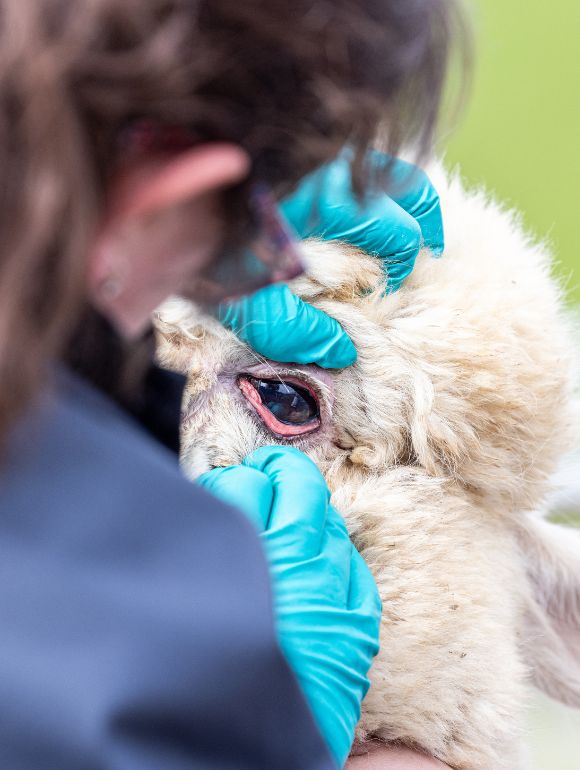
Anaemia is a common clinical presentation in alpacas. Anaemia can be assessed by checking eye membrane colour regularly. We would recommend checking eye colour at least monthly, but with increased frequence during high-risk periods.
The most common cause of Anaemia in camelids is Haemonchus (barber pole worm) but this isn’t the only cause.
Haemonchus contortus
Haemonchus contortus, also known as Barber’s pole worm, lives in the C3 and feeds on blood. Each worm can ingest up to 0.05ml/day so an alpaca with 5000 worms may lose 250mls blood daily. Each adult female worm can produce 5000-15,000 eggs so high levels of infection and blood loss can happen quickly. A dry spell followed by warm, wet weather creates perfect conditions for a sudden surge in Haemonchus. Weekly eye membrane checks can help pick up affected animals so treatment can be started as early as possible. Larvae can suck enough blood to cause disease, which means that worm egg counts can be negative as adults have not developed yet to produce eggs.
Treatment requires an appropriate anthelmintic, and in some cases blood transfusions to help replace blood lost.
Prevention is the best cure – regularly poo picking will reduce eggs on the pasture. Eggs hatch every 3-5 days, therefore poo picking at least every 3 days is important to reduce larvae. Everyday poo picking would reduce this further; the more you pick, the less there is to find!
Mycoplasma
Mycoplasma haemolamae is a bacterium which attaches to the red blood cells of camelids. The majority of alpacas infected with this bacteria show no signs of infection. However if your animal becomes immunocompromised through other diseases, or is stressed from a move, birthing, weaning, shearing or through other environmental changes (like extreme heat), MH can rear its ugly head.
Quite often we see and treat alpacas with Haemonchus which don’t respond fully to treatment. In these cases, Mycoplasma is then often subsequently found. There is no cure, but treatment can be given to suppress it to a more controlled level.
The exact mode of transmission is not fully understood, but is generally believed to occur through:
- Blood transfer: Contaminated needles, surgical equipment, or shared shearing tools.
- Vector-borne: Potential transmission by arthropods such as biting flies, fleas, or ticks.
- Vertical transmission: In utero transmission from dam to cria can occur
Therefore it is very important to use fresh needles for every animal when vaccinating and injecting all drugs.
C3 Ulcers
Camelids have a third stomach compartment (C3), 80% of which is non-glandular and the distal 20% of which is glandular and secretes acid. There is a distinct line of demarcation between the two zones, which is where ulcers tend to form. Ulcers vary in size, number and depth.
Camelids with C3 ulceration may present with vague signs of colic. Weanlings, more than any other group, may regurgitate frequently with excessive salivation. It is not easy to definitively diagnose these ulcers, since it is not possible to pass an endoscope all the way to C3. Thickening and oedema in the wall of C3 on ultrasound is suggestive of ulceration. Treatment involves suppressing the stomach acid to allow C3 to recover. Unfortunately we can get fully perforated ulcers which leads to fatal peritonitis.
Chronic Anaemia
Any illness which suppresses the bone marrow or spleen will affect the production of red blood cells. Alpacas can get blood cancers such as lymphoma. Its always worth getting those not responding to typical treatments checked by us.
