
Calf Scours – Prevention is Possible!
April 11, 2022


Scouring calves can be frustrating but prevention is possible through good hygiene, colostrum management and an understanding of the causes of disease on your farm.
1. Good hygiene
- Good hygiene is essential for preventing the build up of infectious pathogens
- Regularly muck out and disinfect calving pens
- Dip navels in iodine immediately after birth and again 4 hours later
- Isolate any sick calves and clean out areas that have been contaminated
2. Colostrum management
- Colostrum gives calves antibodies to help protect them from disease
- Ensure colostrum is of good quality
- Consider metabolic profiling cows 2-3 weeks before calving to ensure they are in optimum condition to produce high quality colostrum
- A refractometer can be used on farm to assess colostrum quality
- Ensure calves receive the right quantity of colostrum, quickly enough
- Calves should receive 3l of colostrum within 2 hours of birth, and a further 3l within 24 hours
- Blood samples can be taken from calves within the first week of life to assess colostrum uptake
3. Quick and effective treatment
- Isolate scouring calves away from other calves and clean any contaminated areas to prevent spread to other calves
- Give supportive care
- Keep calves warm and dry; consider using calf jackets
- Keep calves hydrated with oral fluid therapy
- Give 1-2l of electrolytes 4 times daily
- Alternate with milk every 4 hours
- Diagnose the cause to inform treatment
- Take a temperature
- Normal temperature should be 38.0 – 39.5°C
- A high temperature indicates a systemic bacterial infection
- A low temperature may occur with severe dehydration
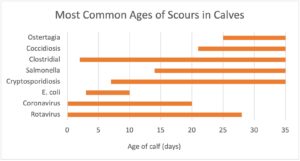
- Consider the age of the calf since different causes are associated with different ages of calf:
- Take a temperature
-
-
- Use an on farm calf scour test kit to diagnose E. coli, Coronavirus, Rotavirus and Cryptosporidiosis
- Submit a faecal sample
- We can look at faecal samples in house for coccidia and worm eggs, and carry out a scour test if you haven’t got one on farm
- We can send faecal samples to the lab to test for Salmonella, E. coli, Cryptosporidiosis, Rotavirus, Coronavirus, Coccidiosis and worms
- Treat appropriately
- Antibiotics
- Injectable antibiotics are essential for treating bacterial infections including E. coli and Salmonella, indicated by a high temperature
- It is also beneficial to treat calves with antibiotics even if they are infected with viruses or parasites, since they are at higher risk of bacterial infection
- Anti-inflammatory pain relief
- Meloxicam (Animeloxan/Meloxidyl) reduces inflammation and pain associated with intestinal disease
- Specific treatments
- Cryptosporidiosis can be treated with halofuginone lactate (Halocur)
- Coccidiosis can be treated with Baycox or Vecoxan
- Ostertagia can be treated with most wormers
- Other drugs
- Steroids or anti-spasmodics may be helpful in severe cases of diarrhoea – talk to a vet about whether these are appropriate
- Antibiotics
-
4. Specific preventative measures
- Use diagnosis to inform your prevention strategies
- Cows can be vaccinated for rotavirus, coronavirus and E. coli so antibodies pass to calves in colostrum
- Pasture management is important in controlling coccidiosis and worms
- Talk to a vet about how to tailor a calf scour prevention strategy to your farm

