Biosecurity Top Tips
AT HOME
KEEP YOUR ENVIRONMENT CLEAN
This will help in both preventing infection and when managing an infectious disease outbreak. Faecal material and bedding should be removed from surfaces. Walls, floors and high contact areas such as stable bolts should be wiped down or washed with a detergent to remove dirt, grease and organic matter; following up with a disinfectant will kill residual pathogens in the environment.
WASH YOUR HANDS
You can be a big reason for the spread of disease from one horse to another. It is good practice to always wash your hands after touching your horse but is especially important when managing an infectious condition. People and clothing can act as a fomite, transmitting a disease onto another healthy horse. Wearing overalls, washing your hands and not handling other horses after touching your poorly pony can all help prevent the spread of a disease.
TEMPERATURE
One of the earliest signs of an infectious disease is a high temperature. Take your horse’s temperature daily, know their normal and isolate if it’s high. 37.0 – 38.5°C is a typical normal range for a horse’s temperature.
VACCINATION
Make sure your horses’ vaccinations are up to date. The most common conditions vaccinated for are equine influenza and tetanus.
AWAY AT COMPETITIONS
DON’T SHARE TACK OR EQUIPMENT
When out competing, there is an increased risk of picking up an infectious disease due to the mixing of unfamiliar horses. Simple things you can do to reduce this risk include taking your own equipment and not mixing tack, brushes, food bowls, water buckets and mucking out equipment with others at the competition.
SHARING ISN’T ALWAYS CARING
Common grazing areas, nose to nose contact with other horses or water troughs could be a source of infection. If it is possible avoid these spaces when competing. If you are staying in temporary stables, you can disinfect these prior to leaving your horse in the stable.
IF YOUR HORSE IS ILL
It’s obvious but if your horse has not left home prior to showing signs of disease, then don’t travel. If your horse shows signs of illness when you get to a show it’s often better not to compete. If you are concerned your horse has been exposed to an infectious disease at the show isolate the horse when you get home prior to mixing with the yard.
NEW HORSE ON YARD?
Keep new arrivals to the yard separated from other horses, ideally in a field or stable that does not have nose to nose contact with other horses or any shared water source. New horses should be temperature checked daily and kept separated for 3 weeks prior to introducing them into the yard properly.

Towcester Vets’ Tasty Dog Treats to Beat the Heat!
There’s no better summer snack than a burst of flavour straight from the freezer, especially when temperatures are uncomfortably high in Northamptonshire. In a mission to help your dog stay cool and hydrated, take a look at Towcester Vets’ affordable freezer delights that you can easily whip up at home below.
Share your recipes and photos on our Facebook page to inspire other dog owners in Northamptonshire!
Inspire Frozen Fun on Facebook
Here at Towcester Vets, we believe happy pets are healthy pets. So, let’s explore some delicious and healthy summer treat options to keep your tail-wagging friend cool and satisfied, and your shopping bill on ice!
1. Furry Frosites: Puree some watermelon or cantaloupe (minus the rind and seeds) and freeze it in ice cube trays or on a lick mat for a refreshing and hydrating snack.
2. Fruity Pupsicles: Blend some dog-friendly fruits like blueberries or strawberries with plain yogurt (avoid artificial sweeteners) and freeze in popsicle moulds (without the sticks). This is a great boredom buster and a delicious way to keep your pup cool.
3. Soupy Slushies: For something savoury, try freezing some bone broth in ice cube trays. This is a tasty and hydrating option, especially for older dogs who might not be as mobile in the summer heat. Bash the frozen broth cubes into a slushy for your dog to enjoy!
4. Frozen Fruit & Veggies: Frozen banana, kiwi, carrot sticks or chopped cucumber slices are crunchy, mouth-watering refreshing treats for dogs – keep portions small though.
Here are Towcester Vets’ top tips to remember:
- Always supervise your pet when they enjoy a treat.
- If you are concerned about choking hazards, drop the ice treat into their water bowl where it will start to melt and shrink.
- Introduce new foods gradually to avoid any tummy troubles.
- Always check new foods are non-toxic for dogs.
- Be mindful of portion sizes, especially for smaller pets.
We’d love to see your creative summer treats! Share photos and recipes of your pup’s favourite cool-down concoctions on our Facebook page!
By providing healthy and refreshing treats, you can help your pet enjoy the summer months safely and happily. Don’t forget, routine check-ups are vital for year-round wellbeing. Schedule an appointment with us at Towcester Vets to ensure your furry friend is happy and healthy all summer long! Call 01327 350239 to book now.

Discover Your Perfect Match – Take the Dog Compatibility Quiz!
Calling all dog owners and wannabe pup parents in Northamptonshire! Ever wondered if you and your furry friend are a perfect match made in doggy heaven? Or which dog breed you’d be most compatible with? Well, wonder no more! This fun quiz from Towcester Vets will help you answer these questions.
See how you and your pup compare with other dog owners in Northamptonshire by sharing your results on our Facebook page.
Share Your Results on Facebook
Towcester Vets’ Dog Compatibility Quiz
Grab a pen and paper and get ready to answer these questions:
1. What’s your ideal weekend activity?
- Lounging in the park with a good book.
- Exploring a new hiking trail with breathtaking views.
- Spending the day at a dog-friendly cafe with friends.
- Relaxing at home with a movie marathon (and plenty of doggy cuddles).
2. How would you describe your daily routine?
- Fairly relaxed, with some errands and leisurely walks.
- Active and busy, with a packed schedule.
- Social and unpredictable, with outings and various activities.
- Home-based, with plenty of time for relaxation and snuggles.
3. How do you feel about training your dog?
- I prefer a well-mannered pup, so consistent training is important.
- I enjoy the challenge of teaching tricks and commands.
- I’m happy with basic obedience, but socialisation is key.
- Positive reinforcement and gentle cues work best for me.
4. What’s your cleaning tolerance level?
- I like things clean and tidy, with minimal shedding tolerated.
- A little mud and fur are a small price to pay for adventure.
- I can handle some mess, but excessive shedding might be a challenge.
- Cuddles are important, so a bit of fur is a furry friend badge of honour!
5. How do you feel about alone time?
- I value my personal space and quiet time.
- I’m okay with short periods alone but prefer company.
- I enjoy social interaction and worry about leaving my dog alone for too long.
- My dog is my constant companion, and I rarely leave them for extended periods.
The Results
Did you enjoy taking Towcester Vets’ Dog Compatibility Test? Are you ready for the results? Tot up how many of each answer you got (a – d) and let’s see how compatible you are:
Mostly A’s: The Independent Soul – You’re a relaxed individual who enjoys peace and quiet. A dog like a Greyhound, Shiba Inu, or Basset Hound might be your perfect match. These breeds are known for being independent and low-maintenance, content with a calm environment and leisurely walks (although a greyhound should have some opportunities for sprinting in safety).
Mostly B’s: The Adventure Buddy – You crave excitement and love exploring the great outdoors. An energetic breed like a Border Collie, Jack Russell Terrier, or Australian Shepherd could be your ideal companion. These pups are full of beans and love accompanying you on hikes, runs, and outdoor adventures.
Mostly C’s: The Social Butterfly – You’re a social butterfly who thrives on company. A friendly and outgoing breed like a Golden Retriever, Labrador Retriever, or Beagle might suit you best. These dogs love meeting new people and furry friends, making them perfect for days out at the park or dog-friendly cafes.
Mostly D’s: The Cuddle Companion – You value relaxation and cherishing moments with your furry friend. A laid-back breed like a Cavalier King Charles Spaniel, Shih Tzu, Bullmastiff, or Bichon Frise could be your ideal match. These cuddly pups are happy to lounge by your side, offering companionship and warmth.
Remember, this is just a bit of fun from our dog-loving team at Towcester Vets. Every dog is an individual, and with love, training, and patience, any dog can become a perfect companion!
Share and compare results with other dog owners and wannabe pup parents in Northamptonshire on our Facebook page – we look forward to joining in the discussion!
Equine Metabolic Syndrome (EMS)
Is your horse struggling to lose weight? Equine Metabolic Syndrome, known as EMS, could be one reason why slimming down seems an impossible task for your equine. Here is some helpful information on EMS and why it is important to manage.
What is EMS?
‘EMS’ or Equine Metabolic Syndrome is a hormonal condition where insulin is not regulated appropriately and horses become insulin resistant, similar to Type II diabetes in people. EMS is most common in overweight horses although all horse can be affected; it poses an increased risk for laminitis.
What are the signs of EMS?
Signs of EMS include:
- Abnormal or regional fat deposits including crest, behind the shoulder, tail ahead and above the eyes
- Difficulty losing weight
- Recurring episodes of laminitis
- Lethargy (lack of energy)
- Increased drinking and urination
- Uncommonly infertility in mares
How is EMS diagnosed?
EMS is diagnosed on a blood test.
A blood sample taken from your horse will be analysed to look at the levels of insulin, adiponectin and glucose. These markers are indicative of EMS.
In some cases, an oral glucose challenge test is required to identify cases of EMS.
How is EMS treated?
Weight management is mainstay in the treatment and prevention of horses with EMS, which can reduce the risk of chronic, recurrent laminitis.
Diet
- Horses should eat 2% of their body weight in food daily (i.e. on a hay only diet this would be 10kg of hay for a 500kg horse).
- For weight loss, this can be reduced to 1.5% of body weight in a 24-hour period. It is important to also include weight of hard feed and grass in these calculations.
- Soaking hay will reduce the sugars and calorie content further. If you are weighing your horse’s hay, then weigh when dry before soaking for 6-12hrs in cold or 1-2 hours in warm water.
- Forage analysis can be useful to learn the nutritional value and calorie content of your hay.
- Up to one third of your horse’s forage ration can be substituted with straw, which is low in calories but ensures continued chewing and gut fill. Straw should be introduced slowly as it can increase the risk of impaction colic.
- Grazing restriction is best done using a track system, grazing muzzle or strip grazing. Time-based restrictions are often ineffective as ponies can eat their daily allowance in as little as four hours! Turnout remains important as the physical activity is of big benefit.
- Avoid giving your horse high sugar treats or hard feed as these are often high in calories. However, a low-calorie balancer is worthwhile to guarantee horses and ponies are still getting all the required vitamins and minerals whilst on a restricted diet. Splitting the balancer into frequent smaller meals can reduce the insulin spike associated with hard feed and is sometimes necessary for severely affected individuals.
- If needing to give medications or supplements use molasses-free foods.
Exercise
- Exercise is very important in weight loss. If your horse or pony has laminitis, please consult with your vet prior to starting an exercise programme.
- Exercise programmes should gradually increase in line with your horse’s fitness; 20 minutes of trot work a day has been shown to improve insulin sensitivity.
Alongside weight management there are medications which can be prescribed for EMS in horses. Medication does not replace strict management of these horses but is used alongside to aid in initial weight loss or when weight loss resistance is encountered.
- Ertugliflozin (& other SGL2 inhibitors) – This is the newest group of available drugs which work by encouraging glucose excretion in urine. The lower blood glucose reduces the insulin level in blood and aids in weight loss.
- Levothyroxine – This drug increases metabolic rate to aid in weight loss.
- Metformin – Used in type II diabetes in people, this drug can also be helpful in EMS cases. It is not absorbed as well by the gut in horses as it is in people, meaning this drug is not as commonly prescribed now there are newer drugs available.
Danielle Bowles BVMedSci (Hons) BVM BVS MRCVS
Sheep Fertility Summary
Thank you to everyone who joined us on 10th June for our sheep fertility meeting, where we discussed ram preparation, teasers and ewe synchronisation with the team from Zoetis. Advance planning for tupping is key – purchasing new rams early to allow them to settle in prior to breeding; performing the 5 T’s ram MOT at least 10 weeks prior to introduction to allow for changes in diet, treatment etc; ensuring teasers have at least 4-6 weeks between the op and going in with the ewes.
5T’s Ram MOT
Toes – lame rams will struggle with physically serving ewes and semen quality will be impacted;
Teeth – a full mouth with no over/under shot jaw and no sign of lumps or bumps palpable around the jaw;
Testicles – scrotal circumference should be at or above the breed standard, usually around 34-36cm and the testicles should feel firm (not hard or painful.) Rams have the advantage that unlike cattle, if their testicles measure and feel ok, then usually they are ok. If there are any concerns at this point we can go on to perform semen analysis.
Tone – body condition score 3.5-4 is ideal to start the breeding season.
Treat – ensure all vaccinations, worming etc are up to date.
Selecting the right candidate for vasectomy is important, to get the best out of your teaser a shearling is better than a ram lamb but still provides plenty of longevity – we don’t want failed rams! Vasectomised rams need an annual MOT too – we need them to be fit to get the best out of them.
Andy from Zoetis then spoke about their CIDR Ovis devices and their benefits vs sponges for synchronising ewes. The feel in the room was that clients who used the CIDR Ovis wouldn’t go back to sponges, mainly due to the significantly reduced vaginal discharge. Andy emphasised the slightly different timings with CIDR Ovis vs sponges so please get in touch to talk through protocols if you are looking to use them for the first time.

Disposal of Sharps
We are pleased to finally be able to offer disposal of sharps and medicine bins! Bins for both can be purchased from us in a range of sizes and the sale price will include the cost of disposal.
Sharps bins are available in sizes from 1L. The vets carry 5L or 7L bins so please have a look if you aren’t sure. A 5L sharps bin costs £16.07 including disposal (ex VAT). Medicine bins are available in sizes from 5 to 60L. A 60L bin costs £15.45 including disposal (ex VAT). Medicine bins are for syringes, medicine bottles and wormer bottles. If you use oxytocin, enzaprost or any other hormones on farm, these will need to go in separate designated bins available in 5L, 11L or 22L.
It is essential that all medicines, sharps and syringes are disposed of correctly and in the appropriate bins. You will be required to sign to say that this has been carried out in accordance with our guidance. If it is subsequently found that this guidance has not been followed, you will be charged for any costs incurred by the practice or the company that collects from us.
Bins will be picked up from farm by the vets but please do let Debbie know when booking routine calls so that vets can ensure they have space in their car to do this. If not, we may have to come and collect another day.

New SFI Animal Health and Welfare Pathway Opportunities
Over the past 18 months, many farmers have been benefiting from the Animal Health and Welfare Review. Further support is now available to help reduce the levels of endemic disease in livestock.
The initial review involves a vet visiting your farm to put together a health plan with a focus on improving health and welfare, and increasing productivity. A sheep review requires a wormer drench check test whilst a cattle review requires bovine viral diarrhoea (BVD) blood antibody or bulk milk testing. Endemic disease follow-up testing can only be done after a review has been completed, and must be done no more than 10 months after the review. Reviews and follow-ups can be repeated up to 3 times, with at least 10 months between each review and at least 10 months between each follow-up.
Follow-up testing for sheep involves selecting a sheep health package to investigate. These are: ewe condition, reproductive performance, lamb performance, neonatal lamb survival, external parasites, and lameness. This means the funding can be used for a very wide variety of disease testing, including Maedi-Visna (MV), Johne’s, trace elements, metabolic status, causes of abortion, sheep scab, and much more. The funding can be used for other accreditation schemes you are already a member of, such as MV accreditation.
Follow-up testing for beef cattle involves further investigation into BVD if it was found to be present during the initial review. If all BVD results were negative, no further testing is required but a BVD-focused biosecurity assessment must be completed. Follow-up testing is not available for dairy cattle yet.
Find out more here: https://www.gov.uk/guidance/farmers-how-to-apply-for-funding-to-improve-animal-health-and-welfare. Or ring the office to chat about how you could benefit.
The following funding is currently available:
| Species | Minimum number of animals required | Animal Health and Welfare Review Funding | Endemic Disease Follow-Up Funding |
| Sheep | 21 or more | £436 | £639 |
| Beef Cattle | 11 or more | £522 | £837 if BVD result is positive
£215 if BVD result is negative |
| Dairy Cattle | 11 or more | £372 | N/A |
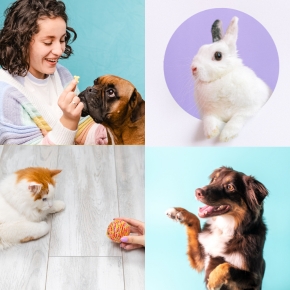
Trick Training for Dogs, Cats and Rabbits with Towcester Vets
Enrich your pet’s playtime and impress your friends by teaching your furry friend some fun tricks! But before you break out the clicker and treats, it’s important to consider your pet’s personality and natural abilities. Here at Towcester Vets, we’ve put together some ideas to get you started, with tips for different furry (or fluffy) pets.
Remember to capture your pet’s best attempts (and bloopers) with your camera. We’d love to see, please do share your pet photos and videos on our Facebook page.
Pet tricks to make your bestie shine!
Tricks for Daring Doggies:
Dogs are natural learners and love to please, making them prime candidates for trick training. Get your dog to share their skills at their next visit to Towcester Vets and we’ll be sure to reward them with extra treats!
- The Classics: “Sit,” “Stay,” and “Shake” are a great foundation for more complex tricks.
- High Fives: Hold a treat out flat and guide your dog’s paw to touch it. Reward with praise and the treat!
- Spin: Lure your dog with a treat in a circular motion, gradually fading the lure as they get the hang of it.
Tricks for Curious Cats:
Cats can be more independent, but according to our cat-loving veterinary nurses at Towcester, with patience and positive reinforcement, some cats can learn impressive tricks too!
- Jumping Through Hoops: Start with a large hoop and gradually reduce the size as your cat becomes confident.
- Target Training: Touch a target stick (like a chopstick) to their nose and reward them when they touch it back. This can be used to teach them to touch other objects on command.
- Fetch: Some cats love to chase after toys! Start by throwing a lightweight ball near them and gradually increase the distance.
Tricks for Rabbits:
Rabbits are intelligent creatures who can learn simple tricks with positive reinforcement. We’d love to see your rabbit enjoying their trick training – pop over to Towcester Vets’ Facebook page and share your photos and videos.
- Coming When Called: Start by saying their name while offering a treat. Gradually increase the distance and only reward them when they come to you.
- Spin: Hold a treat near their nose and slowly turn in a circle. They might naturally follow the treat, earning a reward when they complete a full spin.
- Obstacle Course: Set up a simple course with tunnels and boxes. Lure them through with treats, gradually increasing the complexity as they get the hang of it.
Remember:
- Keep it Positive: Use praise, petting, and treats to reward your pet for good attempts.
- Short Sessions: Training should be fun, not stressful. Aim for short, frequent sessions to keep your pet engaged.
- Respect Their Limits: Not all pets will enjoy learning tricks. Read your pet’s body language and stop if they seem disinterested or frustrated.
Beyond the basics:
We hope you enjoyed our trick training for dogs, cats and rabbits. The internet is FULL of inspiration for more advanced tricks. Just remember to choose tricks that are suitable for your pet’s natural abilities and always prioritise their wellbeing. With patience and positive reinforcement, you might just have the star of the show at your next gathering!
So, grab those treats and get training!
Make our day and pop into our vet practice in Towcester to show off your pet’s skills, or share their antics on our Facebook page!
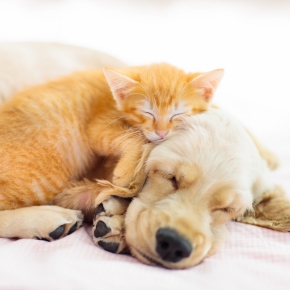
School’s Out for Summer: Right Time to Get a New Pet?
Getting a new puppy or kitten during the school summer holidays is a popular choice for households in Northamptonshire. Towcester Vets has put together a guide to help soon-to-be pet parents prepare for their joyful addition below.
We’ve also created a handy checklist for adopting or buying a new puppy or kitten – download it here.
Tell us all about your new pet and book their first appointment by calling 01327 350239.
Why summer holidays are ideal for new pets
At Towcester Vets, we often see an increase in new puppies and kittens in July and August. Here’s why this time is ideal:
- More Time at Home: Holiday time provides a perfect opportunity to care for, train, and socialise a new pet. It’s also important to gently introduce them to being alone to avoid separation anxiety later on.
- Kids’ Involvement: With children off school, they can participate in your new pet’s early days and learn valuable lessons about pet care.
Before you adopt or buy, use our checklist
Before getting a new puppy or kitten, use our checklist to ensure you avoid any red flags.
How to get prepared for their arrival
1. Pet-Proof Your Home: Puppies and kittens are curious explorers. Make your home safe by removing hazards, securing loose cords, and locking away chemicals. Consider installing a stair gate for added safety and check your garden for harmful plants.
2. Gather the Essentials: Before your pet arrives, ensure you have suitable food, bowls, a collar & lead (dogs), a crate or carrier, bedding, and toys. Stick to the breeder’s food brand to begin with to avoid tummy upsets. Our team will be happy to advise you on puppy or kitten nutrition at your first appointment with us.
3. Plan for Toilet Training: Choose a toilet area in your garden for your puppy, or set up litter trays for your kitten. Maintain a consistent schedule (after they have eaten, played, and slept) and use training pads for any accidents. Use positive reinforcement and reward successes.
4. Socialisation for Puppies & Kittens: Summer is ideal for socialising your new pet. Gently introduce them to new experiences, sounds, people, and animals to build their confidence and ensure they grow up happy and well-adjusted.
5. Research Training: Explore training techniques and consider classes for your puppy in Northamptonshire, which will help them grow into a well-mannered adult. Even cats can learn some commands with gentle training and perseverance!
6. Prepare your family: Teach your family about gentle handling, playtime, feeding, and exercise. Encourage everyone to be involved in your pet’s daily care, fostering a loving environment. Young pets also need lots of rest, so place their crate or bed in a quiet part of your home.
By following Towcester Vets’ tips, you’ll create a welcoming and safe home for your new furry friend this summer.
We’re excited to support you in this beautiful journey of adding a new member to your family! Remember to register your pet and book their first appointment with us.

Towcester Vets Shares Reunion Tales of Long-Lost Microchipped Cats
The team at Towcester Vets team know there’s nothing quite like the bond between a cat and their owner. Unfortunately, sometimes our beloved feline friends go missing, leaving a void in our hearts. However, thanks to the power of cat microchipping, many of these long-lost cats have been joyfully reunited with their humans. With the recent enforcement of the new microchipping law for cats in England, we believe it’s an ideal time to highlight the importance of microchipping and share some heartwarming stories of happy reunions.
Heartwarming reunions of long-lost cats
Towcester Vets’ team have found some incredible reunion stories of cats presumed lost forever, showing that there is always hope if your cat has been microchipped. Read on to learn about Toby, Fred, and Oscar.
Toby, missing for 11 years, returns home
After fearing Toby was gone forever in 2012, this adventurous tabby was miraculously returned home to his astonished owners 11 years later! A quick scan of Toby’s microchip by Cats Protection revealed his owner’s contact details, leading to an emotional reunion. Read Toby’s full story here.
Fred turns up 5 years later, 2 miles away
Fred’s owner was devastated when he went missing in 2019. Turns out he had been living as a stray before being taken in by a kind elderly man, who took Fred to a local vet for a checkup. The microchip scan brought unexpected joy to his owner who had given up hope of ever seeing him again. Read Fred’s full story here.
Book a cat microchipping appointment now at our vet practice in Towcester.
Oscar, lost in a snowstorm, gets a happy reunion
In the heavy snow of January 2022, Oscar took off and didn’t return home. After endless searching and social media posts, Oscar’s owner presumed him dead. Then one day, 3 years later, a vet called to say Oscar had been living in a garden just 6 miles away and had been identified by his microchip! Read Oscar’s full story here.
The importance of Cat Microchipping
These incredible stories are not just rare occurrences. Our team say they highlight the vital role that cat microchipping plays in reuniting lost cats with their owners. The new law, which came into effect on June 10th 2024, mandates that all cats in the UK over 20 weeks old must be microchipped. This regulation aims to reduce the number of lost cats and increase the chances of reunions like the ones mentioned above.
It’s not too late to microchip your cat
If you haven’t yet microchipped your cat, it’s not too late. Towcester Vets highlights some compelling reasons why you should book your cat’s microchipping appointment without delay:
- Quick Identification: A microchip is a reliable and permanent solution to ensure your cat can be identified if they ever get lost, unlike collars and tags, which can come off.
- Peace of Mind: Knowing that your cat has a microchip gives you peace of mind. Should your pet ever wander off, there’s a higher chance of them being reunited with you.
- Legal Requirement: Complying with the new law helps to avoid fines and ensures that your cat is part of a nationwide effort to improve cat safety and welfare.
The recent stories of long-lost cats being reunited with their owners underscores the immense value of microchipping. As we adjust to the new cat microchipping law, let’s take proactive steps to ensure our beloved pets are protected. Don’t delay – get your cat microchipped at Towcester Vets today.