TW // Towcester Vets explains cancer risk to unneutered female rabbits
Trigger Warning – This article contains subject matter that some readers might find upsetting.
As Pet Cancer Awareness Month is in November, the vets at our Towcester surgery are sharing their knowledge on the subject of uterine tumours in rabbits. Our aim is to help pet owners make an informed decision about their rabbit’s reproductive care.
If you have any concerns about your rabbit’s health, get in touch with our Burcote Road team by calling 01327 350239.
About uterine tumours in rabbits
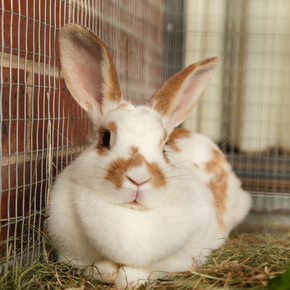
Uterine tumours (cancer of the womb) are said to be the single most common cancer affecting rabbits, even though only females can get this disease. It is extremely aggressive and quickly spreads to the lungs and other organs in the abdomen.
The reason that female rabbits are prone to cancer of the womb is due to their overactive reproductive tract. Regardless of whether they are bred from or not, female rabbits have the ability to breed exceptionally fast. As they age, this causes the uterine wall to undergo metaplasia (cells change form) and then neoplasia – which is the formation of tumours.
Rabbits at risk
All unneutered does (female rabbits) are at risk of developing uterine tumours. It is expected that around 40% of unneutered does will develop tumours by two years old; this number doubles by six years old regardless of whether the rabbit has been bred from. The only preventative treatment for cancer of the womb is neutering as this removes the uterus and therefore the possibility of this disease developing.
Rabbit neutering also helps to prevent unplanned pregnancies.
Signs of illness to watch out for
- Blood in the urine
- Bloody discharge
- Weight loss
- A swelling in the abdominal area
The above are all signs that there could be a uterine tumour present. If the cancer has spread to the lungs, you may notice coughing or breathing difficulties.
Some of the above symptoms could also be due to other health issues so it is always best to see a vet.
How we diagnose and treat cancer of the womb
Depending on the symptoms your rabbit is displaying, they are likely to need an ultrasound scan or an x-ray. An ultrasound may be able to show an abnormal growth in/on the uterus and then exploratory surgery can confirm if it is a tumour. An x-ray may be able to show secondary tumours in the lungs if they are large enough.
Treatment for uterine tumours in rabbits involves the surgical removal of the uterus and ovaries for the best chance of recovery. However, if the cancer has spread, sadly the outcome is unlikely to be positive.
At Towcester Vets, our vets will talk you through the best option for your rabbit’s ongoing care and can schedule any necessary exploratory scans or procedures.
If you are concerned about your rabbit’s health, book an appointment with any of our highly experienced vets as soon as possible by calling 01327 350239.

How to choose a good cat sitter in Northamptonshire
There are some excellent catteries in Northamptonshire, but not all cats do well away from home and their normal routine. Stay-at-home care is an increasingly popular option, but it is important to get the details right for your cat. So, our nursing team have put together a few handy tips and checklist that you may find useful.
Download our cat holiday checklist
Types of holiday care for cats
Daily visits can be carried out by a friend, neighbour, or professional cat sitter. They will need to ensure your cat has enough food and water, as well as take care of their basic needs.
Live-in care is a more focussed version of daily visits, ideal if you have a few pets. Your furry friends will have constant company and their routine will be maintained.
In both cases, it can also be reassuring to know that someone you trust is visiting your home each day, checking everything is secure and everyone is healthy.
Whichever option you choose, you will need to check with your selected cat sitter to make sure they will provide the following:
- Regular visits – your cat should be visited at least twice daily
- Meals – their food and routine should be the same as if you were at home
- Water – an abundant supply of fresh water must always be available
- Litter – trays should be cleaned twice daily, especially during warm weather
Choosing the right cat sitter
As your pet is one of the most important parts of your life, you will feel better while you are away if you know that someone trustworthy and knowledgeable is looking after your cat.
Our Burcote Road nursing team recommend checking:
- References – if it is not someone you know personally, are they able to provide details of a few other people they have pet sat for?
- Knowledge – they should be able to spot signs of ill health and be able to care for any specific issues that your cat may have. Plus, if your cat needs regular medication, they should be capable of administering it.
- Quality time – the person should be willing to play with your cat or simply spend time sitting with them, for company.
- Insurance – if your cat sitter is a professional, they should be insured – ask to check their documents.
Whichever option you choose for your pet, be sure to download our cat holiday checklist . If you have any questions, you can always ask them on our Facebook page if you think they may be useful to other cat owners.
Remember to download our cat holiday checklist before you go.

Pet diabetes: could your pet be at risk and can you prevent it?
Just like humans, pets can also develop diabetes. There are two different types of diabetes, but diabetes mellitus is the most common form that cats and dogs can develop. The team at Towcester Vets in Northamptonshire have some advice for pet owners on how to spot common symptoms of diabetes mellitus at home in between annual and 6-monthly vet checks.
Common signs of Diabetes Mellitus
Diabetes mellitus occurs due to an insulin deficiency in the body. It is always helpful if pet owners can recognise signs of diabetes to help monitor their pet closely for any changes in their health.
Common signs that may show your cat or dog has symptoms of diabetes:
- Drinking more than normal
- Weeing more often
- Increased appetite
- Weight loss even if they are eating more
- Seeming a bit ‘off’ or depressed
- Reduced appetite or not eating
- Vomiting (with other symptoms of diabetes)
Many of these signs can be linked with other conditions but if you have any concerns, it is always best to get your pet looked at. You you should not overlook any symptoms whatever age your pet is. There are a few factors that can make your pet higher risk for diabetes – these include:
- Age – older pets are more likely to develop diabetes
- Sex – entire female dogs and castrated overweight male cats are more likely to develop diabetes
- Chronic pancreatitis
- Cushing’s disease
- Genetics
- Obesity
Can you prevent pet diabetes?
One of the main causes of pet diabetes that owners can influence is obesity. Carrying extra fat can contribute to insulin resistance and is a risk factor for pancreatitis, which can lead to diabetes.
Vets believe that 51% of dogs and 49% of cats are overweight (9487 PFMA Obesity White Paper 2019_Web.pdf).
Helping your pet to lose weight can be challenging on your own. Our vets and nurses are here to help guide you if your pet needs to lose weight.
By regularly weighing your cat or dog at home, or at our Northamptonshire veterinary clinic, you learn what is normal for them and spot weight changes sooner.
If you spot any of the symptoms above, or your pet’s weight is trending upwards or downwards, it is best to get them checked by a vet. The chances are it is something simple, but it is better to get it looked at and get your dog or cat the treatment they need.

Seeing Trigger Warnings in Towcester farm news? Here’s why
At Towcester Farm Vets, we do our very best to keep Northamptonshire farmers informed and up to date with current diseases, health conditions, treatment options, and more; this is why we cover such a wide variety of topics in our farm news articles. However, we recognise that for some people, some of the topics we write about may include content that could trigger a negative emotional or physical response.
Therefore, we will endeavour to include content and trigger warnings going forward for common trigger subjects to help you as the reader decide when and how you wish to engage with our content.
What are content & trigger warnings?
In the context of the news articles we create,
Content Warnings – shown as CW or CW //
– Describe something that might upset readers and make them feel bad e.g., blood.
Trigger Warnings – shown as TW or TW //
– Aim to prevent exposing someone with past trauma, to something that might insight a physical and/or mental reaction e.g., end of life, life-threatening diseases, obesity/diet advice, and traumatic accidents.
At Towcester Farm Vets, our aim is to always be respectful to our readers whilst educating and supporting our clients through our news content. If you have any feedback or suggestions on this subject, you can let us know by sending us a private message on our Facebook page here or feel free to email us.
Did you know you can receive our pet care news straight to your inbox each month? Just visit our News section and sign up!

Why Trigger Warnings will be in Towcester’s pet care news
At Towcester Vets, we do our very best to keep Northamptonshire pet owners informed and up to date with current diseases, health conditions, treatment options, and more; this is why we cover such a wide variety of topics in our pet care news articles. However, we recognise that for some people, some of the topics we write about may include content that could trigger a negative emotional or physical response.
Therefore, we will endeavour to include content and trigger warnings going forward for common trigger subjects to help you as the reader decide when and how you wish to engage with our content.
What are content & trigger warnings?
In the context of the news articles we create,
Content Warnings – shown as CW or CW //
– Describe something that might upset readers and make them feel bad e.g., blood.
Trigger Warnings – shown as TW or TW //
– Aim to prevent exposing someone with past trauma, to something that might insight a physical and/or mental reaction e.g., end of life, life-threatening diseases, obesity/diet advice, and traumatic accidents.
At Towcester Vets, our aim is to always be respectful to our readers whilst educating and supporting pet owners through our news content. If you have any feedback or suggestions on this subject, you can let us know by sending us a private message on our Facebook page here or feel free to email us.
Did you know you can receive our pet care news straight to your inbox each month? Just visit our News section and sign up!

Why Trigger Warnings will be in our equine news
At Towcester Equine Vets, we do our very best to keep Northamptonshire equine keepers informed and up to date with current diseases, health conditions, treatment options, and more; this is why we cover such a wide variety of topics in our equine news articles. However, we recognise that for some people, some of the topics we write about may include content that could trigger a negative emotional or physical response.
Therefore, we will endeavour to include content and trigger warnings going forward for common trigger subjects to help you as the reader decide when and how you wish to engage with our content.
What are content & trigger warnings?
In the context of the news articles we create,
Content Warnings – shown as CW or CW //
– Describe something that might upset readers and make them feel bad e.g., blood.
Trigger Warnings – shown as TW or TW //
– Aim to prevent exposing someone with past trauma, to something that might insight a physical and/or mental reaction e.g., end of life, life-threatening diseases, obesity/diet advice, and traumatic accidents.
At Towcester Vets, our aim is to always be respectful to our readers whilst educating and supporting our equine clients through our news content. If you have any feedback or suggestions on this subject, you can let us know by sending us a private message on our Facebook page here or feel free to email us.
Did you know you can receive our equine news straight to your inbox each month? Just visit our News section and sign up!

12 signs that your cat could be in pain
Did you know that September is Animal Pain Awareness Month? In this article, our veterinary surgeons are examining a firm favourite of our pet-loving nation – cats. Keep reading to understand why spotting pain in cats can be tricky, and the tell-tale signs to look out for that show your cat needs veterinary attention.
If you have any concerns about your cat after reading our article, book a consult at our Burcote Road vet practice.
Cats are amazing creatures and have adapted in ways that can hide the most painful feelings they experience. Because of the ancestry of cats, showing pain or weakness in a wild environment could leave them vulnerable, so they would hide these feelings.
Now, obviously pet cats do not live in the wild, but they still express many of the same behaviours. As a nod to Animal Pain Awareness Month, our vets want to help pet owners understand how to identify pain in their cats.
How to spot pain in cats
When humans are in pain or discomfort, we can verbalise and show physically what and where the problem is. Cats are limited in these ways and given their nature are less inclined to draw attention to pain. Therefore, many signs and symptoms can be difficult to spot because they do not want you to know! Our vets’ advice is that you may notice the below changes in your cat at home:
12 signs that can indicate pain in cats
- Behaviour changes
- Lameness/subtly shifting weight onto other legs
- Biting the area or overgrooming
- Loss of appetite
- Lethargy
- Lack of interest
- Reluctance to interact
- Reluctance to be touched
- Swelling/redness
- Sleeping more than normal
- Not wanting to move much
- Increased vocalisation
There are many different types and causes of pain. Some pain can be more subtle, chronic pain can gradually increase, and then there is more intense acute pain. If you notice any of the above symptoms it is important to speak to your Vet to make sure your cat is not quietly suffering in pain.
We are here if you need us. Contact us to book a cat check-up with any of our highly skilled Vets as soon as possible.

Towcester Farm Vets praise HM Queen Elizabeth II’s passion for animal conservation
As the nation prepares to say its final goodbyes to the late HM Queen Elizabeth II over the next two weeks, the team at Towcester Farm Vets in Northamptonshire want to take a moment to celebrate her life, her reign and, importantly, her love of animals and commitment to their welfare and breed longevity.
From a young age, Queen Elizabeth held a deep love and connection to animals. From her own huge array of Corgis, Dorgis, and Dachshunds, to her over 100 horses and her sponsorship of wild animals in London Zoo, the late monarch was a passionate animal lover who will be sorely missed.
Queen Elizabeth’s passion for horses was also both well-known and borne from an incredibly young age. Throughout her life she owned winning racehorses to traditional Highland ponies; her first horse, a Shetland, was a gift at just age 4! Queen Elizabeth also brought Monty Robert’s Natural Horsemanship movement in the United States over to the UK in hope of mainstreaming a kind, gentle approach to horse ownership and behaviour – a practice that continues to grow in popularity and increase the welfare of horses today, and one which shows her genuine compassion and love for animals.
HM Queen Elizabeth also had a great and long-standing passion and interest in farming, agriculture, and conservation.
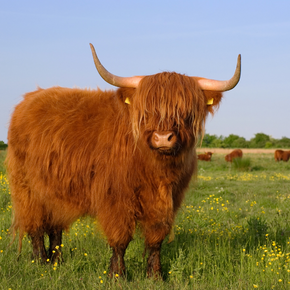

She had two favourite highland breeds – Highland Cattle (photo – far left/above on a mobile) and Highland ponies. They were kept at the Balmoral estate and she was deemed an expert on both. Just as she has become the longest reigning monarch, her Jersey cattle herds (similar to these in the photo – left/above on a mobile) is one of the oldest in the UK with records dating back to 1871. She also won many awards with her cattle and horses.
Her important role in the conservation of heritage breeds of farm animals is also to be remembered with pride. Thanks to her intervention, the Cleveland Bay horse breed was saved, along with several other breeds she helped to protect.
Queen Elizabeth owned and enjoyed Fell ponies too, a breed with an estimated global population of under 6,000. She brought them into the public eye and helped spread awareness of the breed. King Charles III will now continue her legacy as the patron of the Rare Breeds Survival Trust (RBST).

A young princess Elizabeth was gifted her first dog, a Corgi named Susan, for her 18th birthday in 1944. She would go on to own more than 30 Corgis and Dorgis (much like these in this photo – left) over the next 78 years! A final two Corgis, Muick and Sandy, were gifted to the Queen in 2021 by her children in the wake of her beloved Prince Philip’s death. It has this week been confirmed that these two young dogs will remain in the care of her children.
More than just animal ownership, Queen Elizabeth was actively involved in several animal organisations. A patron of both the RSPCA and of our very own Royal College of Veterinary Surgeons, RCVS – she held a life-long dedication to not just the ownership, but the welfare of animals. Queen Elizabeth was a patron and steadfast supporter of the RCVS since 1952, a connection that our team and our profession are deeply respectful and proud of.
As well as RCVS and the RSPCA, HM Queen Elizabeth is patron of many organisations including:
- The National Federation of Young Farmers’ Club
- Royal Agricultural Society of England
- The Red Poll Cattle Society
- Royal Norfolk Agricultural Association
- The Royal Agricultural Benevolent Institution
- The Royal Association of British Dairy Farmers (RABDF)
- The Highland Cattle Society
- The Highland Pony Society
- Jersey Cattle Society of the United Kingdom
- Royal Jersey Agricultural and Horticultural Society
- Rare Breeds Survival Trust (RBST)
- Royal Highland and Agricultural Society of Scotland
 And we must not forget her love of pigeons. Originally a gift from the Belgian Royal Family to the British Monarchy in 1886, the Queen’s pigeons are entered into one or two club races every week and all national races during the season. Over the years, the pigeons have won every major race in the UK.
HM Queen Elizabeth II was also patron of many pigeon racing societies in recognition of her interest in the sport, including the Royal Pigeon Racing Association and the National Flying Club.
On behalf of everyone here at Towcester Farm Vets and within our veterinary profession, we send our heartfelt condolences to the Royal Family and look forward to Queen Elizabeth’s legacy carrying on with love and support for all animals and those who care for them.
Reduced services on Monday 19th September
As a mark of respect and to enable as many of our team as possible to be a part of the day’s proceedings if they wish, our services will be reduced on Monday 19th September. In order to keep our commitment to pre-booked client appointments, we will be operating a skeleton staff and will be here for farm emergencies. We kindly ask that you postpone calling us for routine and general enquiries until the following day.
Towcester Vets praise Queen Elizabeth II for her lifelong dedication to animals
As the nation prepares to say its final goodbyes to the late HM Queen Elizabeth II over the next two weeks, the team at Towcester Vets in Northamptonshire want to take a moment to celebrate her life, her reign and, importantly, her love of animals.
From a young age, Queen Elizabeth held a deep love and connection to animals. From her own huge array of Corgis, Dorgis, and Dachshunds, to her over 100 horses and her sponsorship of wild animals in London Zoo, the late monarch was a passionate animal lover who will be sorely missed.
A young princess Elizabeth was gifted her first dog, a Corgi named Susan, for her 18th birthday in 1944. She would go on to own more than 30 Corgis and Dorgis (much like these in this photo – left) over the next 78 years! A final two Corgis, Muick and Sandy, were gifted to the Queen in 2021 by her children in the wake of her beloved Prince Philip’s death. It has this week been confirmed that these two young dogs will remain in the care of her children.
Queen Elizabeth’s passion for horses was also both well-known and borne from an incredibly young age. Throughout her life she owned winning racehorses to traditional Highland ponies; her first horse, a Shetland, was a gift at just age 4! Queen Elizabeth also brought Monty Robert’s Natural Horsemanship movement in the United States over to the UK in hope of mainstreaming a kind, gentle approach to horse ownership and behaviour – a practice that continues to grow in popularity and increase the welfare of horses today, and one which shows her genuine compassion and love for animals.
More than just animal ownership, Queen Elizabeth was actively involved in several animal organisations. A patron of both the RSPCA and of our very own Royal College of Veterinary Surgeons, RCVS – she held a life-long dedication to not just the ownership, but the welfare of animals. Queen Elizabeth was a patron and steadfast supporter of the RCVS since 1952, a connection that our team and our profession are deeply respectful and proud of.
HM Queen Elizabeth also had a great and long-standing passion and interest in farming, agriculture, and conservation.
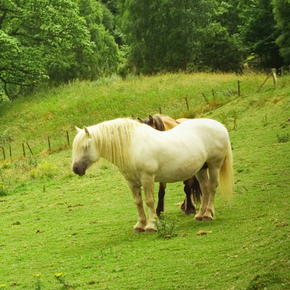
She had two favourite highland breeds – Highland Cattle and Highland ponies (photo – right). They were kept at the Balmoral estate and she was deemed an expert on both. Just as she has become the longest reigning monarch, her Jersey cattle herds is one of the oldest in the UK with records dating back to 1871. She also won many awards with her cattle and horses.
Her important role in the conservation of heritage breeds of farm animals is also to be remembered with pride. Thanks to her intervention, the Cleveland Bay horse breed was saved, along with several other breeds she helped to protect.
Queen Elizabeth owned and enjoyed Fell ponies too, a breed with an estimated global population of under 6,000. She brought them into the public eye and helped spread awareness of the breed. King Charles III will now continue her legacy as the patron of the Rare Breeds Survival Trust (RBST).
As well as RCVS and the RSPCA, HM Queen Elizabeth is patron of many organisations including:
- The National Federation of Young Farmers’ Club
- Royal Agricultural Society of England
- The Red Poll Cattle Society
- Royal Norfolk Agricultural Association
- The Royal Agricultural Benevolent Institution
- The Royal Association of British Dairy Farmers (RABDF)
- The Highland Cattle Society
- The Highland Pony Society
- Jersey Cattle Society of the United Kingdom
- Royal Jersey Agricultural and Horticultural Society
- Rare Breeds Survival Trust (RBST)
- Royal Highland and Agricultural Society of Scotland
And we must not forget her love of pigeons. Originally a gift from the Belgian Royal Family to the British Monarchy in 1886, the Queen’s pigeons are entered into one or two club races every week and all national races during the season. Over the years, the pigeons have won every major race in the UK. HM Queen Elizabeth II was also patron of many pigeon racing societies in recognition of her interest in the sport, including the Royal Pigeon Racing Association and the National Flying Club.
On behalf of everyone here at Towcester Vets and within our veterinary profession, we send our heartfelt condolences to the Royal Family and look forward to Queen Elizabeth’s legacy carrying on with love and support for all animals and those who care for them.
Reduced services on Monday 19th September
As a mark of respect and to enable as many of our team as possible to be a part of the day’s proceedings if they wish, our services will be reduced on Monday 19th September. In order to keep our commitment to pre-booked client appointments, we will be operating a skeleton staff and will be here for pet health emergencies. We kindly ask that you postpone calling us for routine and general enquiries until the following day.

Prep your pet and build a dog den ready for firework season
Getting your dog ready for firework season should ideally start well before the end of October. Loud bangs and bright flashes can feel scary to even the most confident and assured dogs.
The nursing team at Towcester Vets have pulled together their advice on how to help your dog cope when there are fireworks in Northamptonshire, or wherever you are staying. Their advice covers what you can do in the months and weeks leading up to the dreaded firework season, which is typically from the end of October through to the start of January.
Download our guide: How to build a dog den
Before we dig in, are your contact details up to date on the microchip database? Did you move house or change your number recently? If your dog does run off after getting spooked, your chances of being reunited with them are higher if your details are correct.
How to prepare your dog for fireworks
Now your microchip is sorted, it is time to work on helping your dog hopefully get used to the sights & sounds of fireworks, or at least get through the events with minimal stress. Read our vet nurses’ advice on how to do this below.
From a puppy or months in advance
Work on noise desensitisation techniques
Ideally, you will have started practicing noise desensitisation techniques with your puppy during their key socialisation phase of 8-14 weeks of age and carried on with this training as they got older. If not, even a few months before firework season can be helpful. It may be too late to see results for this year, but you can start this now for the future: download ‘Scary Sounds’ – a Sound Training Therapy Program by Sarah Heath.
4 weeks in advance
Consider calming products
Talk to one of our Burcote Road nurses about pet calming products such as plug-in diffusers, sprays, and collars. These devices mimic the appeasement pheromones of pets, to encourage feelings of calm and contentment. With most products, you need to start using them a few weeks in advance of the event for the best results.
If you know your pet will be absolutely terrified of fireworks, perhaps they tremble uncontrollably, continuously bark or excessively drool, then we may be able to prescribe some calming medication.
1 week before
Create a safe space
Our vet nurses advise that it is wise to create a safe space for your dog at least a week in advance – it could even become a permanent fixture. This will give your dog a safe haven to retreat to if they feel scared. You can encourage them to relax in this space by placing treats or toys inside. You should leave them be whilst they are in there, but the occasional ‘check-in’ is fine.
To help you, our team have put together a guide on ways to create a safe space for your dog. You can download this here:
On the day
Batten down the hatches!
Here is our vet nurses’ advice on how to help your dog cope and avoid dangerous situations on a ‘firework day’.
- Exercise your dog during the day; keep them on a lead on the most likely ‘’firework days’ so they cannot bolt if one is set off early.
- Keep your pet indoors at night and make sure they can’t escape via your garden or front door if opened.
- Secure doors, shut windows, and close the curtains to dampen the noise and keep the flashes out of sight.
- Turn the TV or radio volume up a little to drown out the loud bangs.
- Do not leave your pets home alone too long and leave background noise on if you go out.
- Act as normal around your dog to avoid reinforcing negative behaviours by giving extra fuss.
We hope you found this advice from our nursing team helpful and are ready to get into action. Remember to check out our Dog Den Building Guide here.