How to keep your cat calm on a vet visit to Towcester Vets
How to keep your cat calm on a vet visit
By their very nature cats are independent creatures of habit, that like to be in control of their surroundings. Those facts alone can make their annual trip to the vets a stressful experience. The good news however is that by understanding what it is that stresses our cats, there is much you can do, to prepare your cat for a vet visit and mitigate many of the stress causing factors. Here at Towcester Vets, we made a little poster with our top tips.
Get the cat carrier right
Get your cat used to their carrier by leaving it open for them to play around. Perhaps hide treats in it from time to time. This reduces the chance of your cat associating the carrier with negative aspects of travel. In the car, make sure the carrier is level, secure and ideally cover it with a towel so your cat has some privacy as they travel.
Make sure there are familiar smells throughout the outing
Clean the car and get rid of any heavy odour air fresheners. Make sure that the blanket you cover the cage with is a familiar old one from the house. Take spare bedding in case the cat soils the cage and if you need to, consider using a Pheromone spray to calm your cat for the outing.
Waiting room tips to minimise stress
The best way to reduce stress is to minimise your cat’s time in the waiting room so, check your cat in, before you bring it in. keep your cat away from any dogs or other pets whilst you are waiting. Talk to your cat to reassure it but….Please don’t be tempted to open the carrier until you are in the consultation room at Towcester Vets.
And finally – Take a treat
The Veterinary team at Towcester Vets are pretty adept at handling even the most anxious pets but it’s always a good idea to take a familiar treat. Offer this at the end of the visit, before you leave the waiting room, in order to maximise the positive associations of the visit and the treat.
If you’d like any more advice or if your cat is especially stressed when they travel, then please do let us know before you set off and we can offer specific advice for your pet and reassurance for you.

Vasectomy Season 2022!
Vasectomised or teaser rams are a great way to kick start cycling activity in the ewes making sure they are ready to go when the ram is introduced giving you a tighter lambing period. The best candidates are 4-5 months old, and surgery needs to be completed a minimum of 6 weeks prior to introduction to allow for recovery.
Teasers should be in with ewes for 2 weeks before the ram takes over, so an 8-week lead time is necessary.
For more information read our full article or give the team a call on 01327 350239

Best foot forward – cattle lameness
Entire books and conference schedules are devoted to foot care in dairy cattle and, quite rightly, when the industry is running at an estimated 1 in 5 lame milkers. However, our sucklers, finishers and bulls get less attention than they deserve.
Studies have shown a wide range of interpretations of what lameness looks like on beef units with farmers not considering overgrown and misshapen feet and an abnormal gait as lame. Instead, many farmers only really appreciate that lameness is an indication of pain when severe lesions are present.
Cows walk oddly because they are uncomfortable – that could be because the foot is misshapen and cannot bear weight evenly or because there is an infection between the claws, or deeper within the foot which we can all agree must be painful.
We know around 85% of lameness comes from the foot so if you have the skills and equipment to lift, assess and treat the foot then great, but we are aware that some set ups don’t lend themselves to safely doing this. However, this doesn’t mean that all we can do is give antibiotics and anti-inflammatories and shrug our shoulders. We can confidently state that no antibiotic will sort a nail stuck in the foot!
Foot trimmers are in demand but will attend for individuals and perhaps just as usefully can then go through the group and neaten up any misshapen claws that pre-dispose animals to lameness and help prevent future cases.
If you don’t have a contact for foot trimming, please get in touch, we have a list or we will happily attend a lame animal if they can be restrained safely and appropriately.
Lameness in cattle of whatever shape or size rarely resolves itself and the quicker you intervene the sooner the animal recovers. Quick treatment will also prevent deeper damage occurring that will ultimately protect against future foot problems.

Ouch! – Pain relief on the farm
When we’re on the farm we often identify animals that are in pain by changes in their behaviour such as reduced food intakes, lameness, isolation from the group, tooth grinding, depression and/or increased respiratory rate or effort. Pain will reduce an animal’s performance, whether that be mothering ability, milk production or growth rate and must therefore be prevented and/or treated promptly to benefit both farm income and the animal itself.
It is not hard to think of a situation where an animal will experience pain – whether it’s due to a routine management procedure where we can anticipate and reduce pain, or when they suffer disease or injury, where it’s important that unexpected pain is treated promptly and effectively.
For example, the use of local anaesthetic when disbudding and de-horning cattle is not only a legal requirement but a useful tool to reduce handling stress for all involved. The local simply blocks the pain without providing any long-term anti-inflammatory pain relief. Studies have shown that the use of an anti-inflammatory treatment at the time of the procedure reduces the acute pain seen when the local anaesthetic wears off. In addition to their use in de-horning, the same principle is also true for castration in calves (whichever technique is employed) and for tail docking in lambs. All Red Tractor members must use anaesthetic and pain relief for disbudding, dehorning and castration of calves by any method other than rubber rings.
Introducing non-steroidal anti-inflammatories
We have a range of anti-inflammatory pain relief available for cattle. These are classed as non-steroidal anti-inflammatories (NSAIDs). They are useful in a number of situations; as preventatives prior to a surgical procedure, as standalone treatment for an injury or in conjunction with a suitable antibiotic to reduce a high temperature or the inflammation associated with illnesses such as calf pneumonia or mastitis. NSAIDs also reduce tissue damage and make the animal feel better! This in turn means they are more likely to eat and helps reduce any check in weight gain due to ill health. They are essentially the animal equivalent of popping a Nurofen and should be routinely included in treatment protocols.
There are no NSAIDs licensed for sheep, goats or alpacas – not because they don’t work or because these animals do not feel pain but purely because it would cost too much money for the drug companies to get a license. However, as vets we are able to prescribe these drugs under the cascade system. We have plenty of data to know they are effective in helping control pain and inflammation in these species. It has been great to see so many people using NSAIDs over lambing this season and really seeing the benefit of a comfy ewe mothering her lambs after a tricky birth.
Last call for ‘Teaser Ram’ Vasectomies
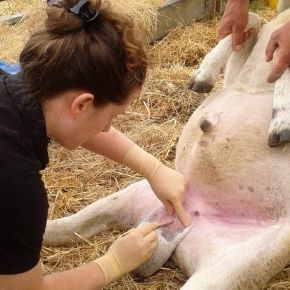
Using vasectomised “teaser” rams is widely recognised as the best way to kick start cycling activity in a group of ewes at the same time. This will make sure their ovaries are raring to go when tups are introduced to the field.
We are coming to the end of ‘Vasectomy time’ at Towcester Farm Vets so if you have not already considered using Teaser Rams, then now’s the time to give us a call.
Contact our Farm vets about Ram Vasectomies
There are three benefits to using teaser rams
- They achieve a more compact lambing period
- This will lead to a better use of labour and resources come lambing time
- More compact lambing periods also help reduce the risk of disease in young lambs
How to choose and use teaser rams
The best candidates for your teasers are young rams, from 4-5 months of age, as they are generally more energetic, have good teeth and joints and less health concerns (what more could any ewe want..!).
One teaser can be expected to work with 100 ewes. We can perform the short operation under sedation on farm or at the surgery and as long as you can provide a pen, some water and someone to help hold the ram we carry everything else with us. Given the time of year good fly cover needs to be in place to prevent flystrike of the operation site.
Timings are important – surgery needs to be completed a minimum of 6 weeks before they are due to work to allow for recovery. It is recommended that teasers go in with the ewes for 14 days before the tups are introduced, so an 8-week lead time to the start of the service period is required. This mean that we are coming to the end of vasectomy time at Towcester Farm Vets, so if you have not already taken action now’s the time to give us a call.
Optimising the effect of teaser rams
The ewes will respond better if kept away from the sight, sound and smell of a male (by at least a mile!) for a month before the teaser goes in with them. As the aim is to get the ewe’s served in a shorter time frame you will need to ensure the tups are in peak condition to serve and increase ram numbers to meet demand (1 ram to around 20-30 ewes)
For more information or to book in any vasectomies, please contact the surgery.

Checklist for new puppy & dog owners in Northamptonshire
Bringing a new pet into the family is an exciting time but there is much to consider before bringing that pet home. We have some advice for wannabe pet owners in Northamptonshire on getting a new pet below.
Download our New Pet checklist
Our Vets always recommend that one of the first things to do as a family is to sit down and have a discussion. Set out what the responsibilities of owning a dog are and how each member of the family needs to contribute. Having this initial discussion can ensure everyone understands the work that is needed for a new dog and what they would like to get out of having a dog. It will also enable everyone to discuss what type of dog they would like and if they would prefer a rescue (puppy or adult) or a puppy from a breeder.
Things to think about may include:
- Breed of dog
- Puppy breeder or rescue animal
- Amount of exercise needed for that breed
- Training required
- Financials such as food costs, routine veterinary care, and insurance
- How will a dog fit into your lifestyle
One of the hardest questions may be whether to go for a puppy from a breeder or a rescue dog. There are advantages and disadvantages to both but our Burcote Road Vets advise that you should make the decision based on what is important as a family.
Choosing a rescue dog
There are many rescue centres in Northamptonshire and further afield, full of loving dogs desperate to find the right home. Rescue centre staff can help you by discussing what your family wants in a dog and identifying those that meet your requirements. Puppies and adult dogs in rescue centres will come from all kinds of different backgrounds. These might include dogs involved in abuse or neglect cases, or dogs whose previous owner could not care for them any longer for many different reasons. With most rescues you will go through a process of bonding with that dog to ensure they are a suitable fit for your family before fully committing. Adopting a rescue animal can be a wonderful and rewarding experience, but one that may require a lot of patience and some behavioural support.
Choosing a puppy from a breeder
Our Vets also advise that whilst puppies are very cute, they take an incredible amount of work initially. Much of this involves different types of training, such as toilet training, walking on a lead, recall, and general behaviour. This can be a very long and challenging process so it is important to have a full understanding of what is required to look after a puppy before buying one. You will also need to research the breeder’s advertising to ensure you are purchasing a puppy from a reputable breeder and avoiding any puppy farms where welfare is compromised.
Which dog breed is right for you?
Consider the breed of dog you would like; different breeds have different requirements such as exercise, food, healthcare, and enrichment. Some breeds have typical character traits and temperaments, so not all will be suitable for your family. A working dog will need a lot more exercise than other breeds so if you are a very active family, having an active dog would be a suitable fit. If you are not very active then looking at breeds that do not have the high working drive would be a better option.
How much does owning a dog cost?
You also need to consider that everything your new dog needs comes with a cost, so be sure you are comfortable with those figures before committing to any pet. Typical costs include routine health care, pet insurance, food, bedding…and that is just for starters.
Get a more comprehensive list of what new puppies and adult dogs need when you download our New Pet Checklist – download now.
So, there you have our advice on choosing a new pet to suit your family. If you have more questions about owing a dog, why not ask us on our Facebook page? Visit us on Facebook
Before you go, remember to,

Vets in Towcester have this kitten care advice
Having a new kitten is very exciting as they attract a lot of attention with their playful antics. However, it must not be forgotten that they require a lot of care too. It is important to have your house prepared with adequate bedding, a cat carrier for vet visits, food and water at the ready, enrichment for your kitten, and to have some knowledge about how to bond with them.
As well as ensuring your kitten is comfortable in your home, you must take them to the vets so they can get vaccinated, microchipped, and checked over for any health problems.
Follow the team at Towcester Vets’ advice below to make sure your kitten has a happy and healthy start to their life with you.
Book a first kitten appointment
Common questions about getting a new kitten
Where do I get a kitten from?
We recommend adopting your kitten from a local animal charity and helping to reduce the number of unwanted kittens that need a home. If you are buying from a breeder, before choosing your kitten you should gather some information such as:
1.When was it born? (Kittens should stay with their mother until they are 12-14 weeks old to avoid some health and developmental issues, although many are separated at 8 weeks)
2.Will I be able to see the kitten with their mother?
3.Is there any information about the father?
4.What breed is the kitten?
5.Is it friendly?
6.Is the kitten on solid food?
All these questions will help you understand what your kitten will be socially and physically comfortable with, as well as any important details concerning breed specificity. In addition, make sure the kitten’s environment looks clean and the litter seems healthy. You can ask similar questions to an animal charity however they may not have all the answers.
Should my kitten be vaccinated?
It is crucial to have your kitten vaccinated, microchipped, treated for worms and fleas, and potentially neutered (at 4 months old). Here at Towcester Vets, we can take care of all these procedures. They are important to ensure disease protection, identification, parasite infestation, and the prevention of unwanted litters.
Important News – there is currently a national shortage of cat vaccines; we are doing everything we can to ensure there are enough vaccines for kittens under our care.
Should my kitten be neutered and chipped?
If you do not want your female kitten to be at risk of becoming pregnant as young as four months old, or your male kitten contributing to the ever-growing population of strays, then yes, your kitten will need to be neutered.
Regarding microchipping, there is a new government legislation to be released in 2022, stating cats must be microchipped by 20 weeks old. If the owner fails to do so, they risk being fined up to £500. Our Veterinary Surgeons can take care of neutering and microchipping at the same time for your kitten.
Kitten nutrition
Kittens require a diet high in energy, protein, vitamins, and minerals. They should have been weaned by the time you purchase them, now requiring soft, wet, digestible food. They will then need to switch to dry food or a mix of wet & dry as they grow. Ask our team about the best types of food for kittens and young cats at your first appointment.
Water should be always available and cats often like running water to drink from if possible. Ideally, your kitten should have a litter tray on each floor of your home away from their food and water bowls. If you have more than one kitten or cat, each will need their own litter tray to avoid fighting.
Enrichment
For enrichment, cats and kittens often enjoy interactive puzzles, toys, food balls, scratching posts, places to climb and hide, and time to roam outside. It is important that your kitten does not venture outside until they have been vaccinated, microchipped, and neutered.
Having a kitten is a very fun, rewarding experience, but also requires effort and responsibility. It is important that you follow the guidance above to ensure your kitten has everything they need for a healthy start, and they are comfortable within your home. If you have any concerns, share them on our Facebook page at Facebook.com/TowcesterVets.
Book an appointment at our Towcester vet practice so our team can advise you further and make sure your kitten gets the preventative treatments they need.

Lifesaving car travel advice for all pet owners from Towcester Vets
#DogsDieInHotCars – Fact. This year, the RSPCA is asking people to get onboard with their campaign as millions of Brits are expected to staycation with their four-legged friends. At Towcester Vets, we are urging ALL PET OWNERS to think ‘safety first’ for every journey they take with their pet, and to share the message with others.
Keep reading to understand how to keep your pet comfortable in the car on warm days with safety tips from our experienced veterinary team.
Please also download & share the free resources at the bottom of this article to help spread this important message.
If you see a pet in a car on a warm day:
Assess the pet’s condition and if they are in distress/showing signs of heatstroke CALL 999.
Signs of heatstroke in pets: Heavy Panting – Excessive Drooling – Lethargic, Drowsy or Uncoordinated – Vomiting – Collapse.
Visit the RSPCA’s website and learn more about what to do if you spot a pet in trouble.
How hot is too hot and how long is ok?
Have you heard the phrase “Not long is too long”? It means exactly what it says.
When the outside temperature is 22 degrees Celsius, inside the car could reach 47 degrees within one hour.
Towcester Vets’ team warn that putting any pet in this situation will cause them harm and suffering, and could easily be fatal. And contrary to popular belief, cloud cover, parking in the shade, and cracking open the window is not enough to help your pet…
Dealing with car journeys on warm days
For many people in Northamptonshire, pet car journeys usually involve their dog. However, any pet can be transported for vet visits, holidays, boarding facilities, groomers, and visiting friends & family.
It is not always possible to avoid situations where your pet is in the car on a warm day for longer than is ideal – being stuck in traffic, running low on fuel, or an emergency situation. However, by planning ahead and thinking ‘safety first’, you will have a better chance of keeping your pet safe.
Think “safety first”
The team at Towcester Vets have put together some helpful advice for pet owners below, including social media images and a handy poster for you to share.
Ask yourself before you travel:
- a) Can I run the errand/fill up with fuel before the car journey with my pet?
- b) Can I travel early or late in the day to avoid the hottest times?
- c) Can someone travel with me and take my pet out of the car if I need to stop?
8 tips for keeping your pet comfortable in the car:
- Install car window shades that cover as much of your backseat windows as possible
- Put your pet or their carrier/crate on the back seat (or in the rear footwell for small pets) – angled car boot glass can amplify the heat from the sun
- Use air-conditioning while you are driving
- Always carry plenty of water with you and a vessel for your pet to drink from
- Make regular stops to check on your pet and provide drinks, fresh air & dog toilet breaks
- If you need to stop at a petrol station pay at the pump wherever possible
- In very slow traffic/an emergency situation, park up and take your pet of the car – could someone come and collect them from you?
- Take a cool mat (not a cooling coat) to use in the shade if your pet is getting hot
If your pet is struggling take them away from the heat source and find some shade to cool them down. Put tepid (not ice-cold) water on their fur, give them a drink, and call a Vet for advice.
We hope you found our advice helpful and are inspired to share it with others in Northamptonshire and beyond. Get the links to our free poster and social sharing images below.
‘Keep pets safe in cars’ FREE resources
Visit Towcester Vets’ website for other helpful pet news & advice.

Towcester Vets warn rabbit owners about deadly RVHD
Rabbit Awareness Week (RAW) – June 1st to 8th – helps to raise awareness around many important topics relating to the welfare and wellbeing of rabbits. One of the current topics being highlighted is RVHD-2. In this article, Towcester Vets’ team of veterinary surgeons warn owners about the dangers of the disease and how to protect your pet rabbits from it.
If your rabbits are not yet vaccinated or are due their annual boosters, you can make an appointment at our Paulerspury or Weedon vet practice and get your pets covered.
What is RVHD-2?
Rabbit Viral Haemorrhagic Disease (also known as RVHD, RHD, and VHD) is a highly contagious, deadly disease that can affect rabbits of all ages. There are two strains of the disease; RVHD-1 surfaced in the 1980’s and RVHD-2 is a more recent development.
Transmission:
The disease is spread by myriad means – which is why house rabbits are not safe from it – including:
- Contact between rabbits and their droppings
- In the droppings of birds and insects
- Through airborne particles
- Contaminated surfaces
- Carried on hands, clothing, shoes, tyres and on other pets’ feet
RVHD symptoms include:
In some cases, sudden death is the first and only sign that a rabbit had contracted RVHD. Other signs include:
- Lethargy
- Fever
- Respiratory difficulty
- Loss of appetite
- Spasms
- Bleeding from the nose or mouth
Differences between RVHD-1 and RVHD-2:
RVHD-2 tends to develop slower, and rabbits will show symptoms for longer, which can include weight loss and jaundice from liver disease. The mortality rate seems to be lower for RVHD-2, however, it is still a killer disease. Another difference is the incubation period between the two strains, which is 1-4 days for RVHD-1 and up to 9 days for RVHD-2.
Treatment & prognosis:
Towcester Vets’ team of experienced Veterinary Surgeons want rabbit owners to understand the seriousness of this disease. RVHD is untreatable and almost always fatal – sometimes within hours – as it causes internal bleeding in major organs. Some rabbits may be offered fluid therapy and pain relief, but very few survive. Therefore, it is vital that your pets are protected.
How to protect your rabbits from RVHD
Rabbit vaccinations can be given from the age of five weeks, with boosters needed every year for life. The RVHD-1 vaccine is usually combined with one for myxomatosis; there is a separate RVHD-2 vaccine.
Our Vets advise that you can further help to protect your pets by;
- avoiding contact with other rabbits when you’re out and about
- making sure your rabbits are nowhere near any wild cousins
- changing clothes after going out and before interacting with your pets
- thoroughly washing your hands before and after handling your pets
You cannot stop insects and many other forms of transmission though, so rabbit vaccinations are a must. Book an appointment with one of our Vets at Paulerspury or Weedon and put your mind at rest.
If you have any more questions about RVHD-1 or RVHD-2, call us on 01327 350239 and a member of our team will be happy to help.
Overriding dorsal spinous processes AKA ‘Kissing spines’
What is Overriding dorsal spinous processes / kissing spines?
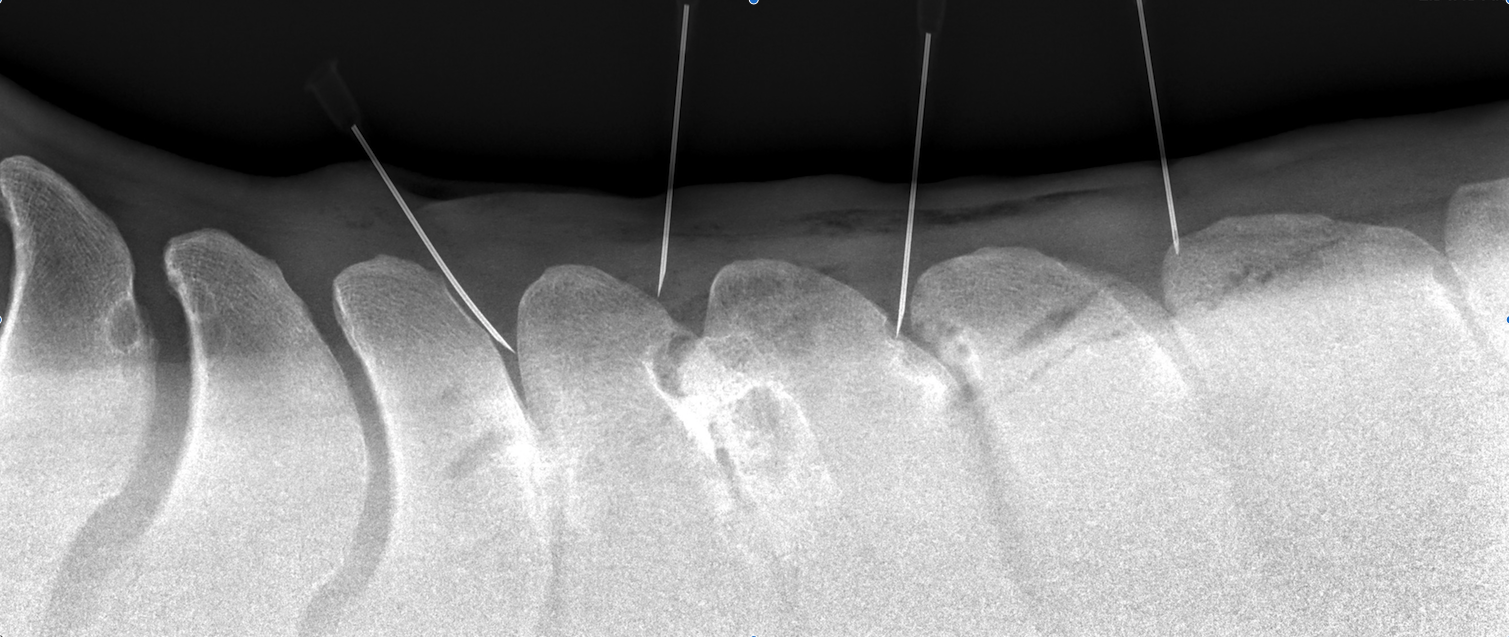
Reduced space between the dorsal spinous processes (DSP’s) of the spinal vertebrae or touching spinal processes is called ‘overriding dorsal spinous processes’. Also referred to as ‘kissing spines’. As it’s a condition that can cause pain and poor performance in horses our nurse technician and physiotherapist Charlie Coyle has compiled this complete guide.
Symptoms
Common symptoms of a horse with overriding DSP’s may include:
- Difficulty in transitions
- Sensitivity to brushing / touching the back
- Hollowing of the back
- Difficulty building topline muscle
- Poor performance during ridden exercise, including unwillingness to go forwards, bucking, rearing, shooting forwards and lack of impulsion
- Stiffness throughout the back
- Becoming difficult to mount
Diagnosis
X-rays are used to diagnose overriding DSP’s. The significance of x-ray findings is often backed up with a comparative dynamic assessment of the horse. This is done twice, once before and once after nerve blocking of the back, where a local aesthetic is injected between the affected dorsal spinous processes. Caution must be exercised in over interpretation of x-rays alone without a dynamic evaluation.
Treatment
Some horses with kissing spine can be treated with conservative management and rehabilitative exercises alone. For others, treatment can involve medication of the affected interspinous spaces.
In some cases, surgery is required. Surgery options include interspinous ligament desmotomy and a DSP resection/ostectomy. The first involves the cutting of the spinous ligament to create a greater space between the affected DSP’s. The DSP resection/ostectomy option involves portions of the close DSP’s being removed.
Rehabilitation post-back medication and DSP surgery
Regular physiotherapy and implementation of a rehabilitation exercise plan post treatment is key for the horse’s recovery and success in returning to work. Veterinary physiotherapy sessions may include massage therapy, myofascial release, stretching exercises and use of electrotherapies. The veterinary physiotherapist will also be able to demonstrate stretches and exercises for you to carry out with your horse between treatments.
Key benefits of physiotherapy include the fact that:
- It accelerates the rate of healing
- It reduces scar tissue formation post surgery
- If offers pain relief
- It increases suppleness and flexibility
- It improves joint range of motion and stride length
- It increases proprioception and straightness
Rehabilitative groundwork exercises
Following surgery, horses undergo two weeks of box rest before starting rehabilitative exercise. This often includes walking in hand, long reining and pole work. The aim of theses exercises is to increase muscle mass and strength over the horses back. During this time, it is advised for the horses to be exercised 5-6 days a week. The horse needs to be exercising most days to prevent formation of muscle adhesions and fascia contraction. However, rest days are also important for recovery when building muscle.
Exercises are progressive, so both the length and intensity of exercise sessions increases week by week. Another good example of this progressive regime is when we move from walking over poles on the ground, to raised poles, followed by grids and combinations of poles.
Gradients and training aids such as a Theraband, can be introduced later in the rehabilitation to activate and strengthen the core and hindend muscles, which in turn will support both the back and the horses overall posture.
Return to ridden exercise
On average, most horses return to ridden exercise 16 weeks post surgery, however this varies case by case. Following back medication, horses usually follow a 3-4 week programme of groundwork exercises before returning to work under saddle. Once the rider is back in the saddle, we progress from walk work, to trotting and canter before jumping exercises are re-introduced. This allows the horse to gradually build strength and endurance in the long back muscles whilst also aiding it to overcome any association between ridden exercise and pain.
Each horse requires a unique rehabilitation plan tailored to their individual case.
DSP Before:
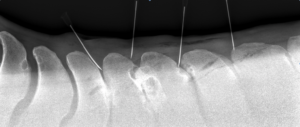
DSP After:

*Please note that the white ring in the middle of the back is just a surgical staple which is removed.
Get physiotherapy for your horse
If you would like to discuss physiotherapy for your horse, please contact Charlie Coyle EEBW BSc (Hons) MNAVP MSc Veterinary Physiotherapist. Charliecoylevetphysio@outlook.com. 07944165989.
Charlie Coyle EEBW BSc (Hons) MNAVP MSc
Charlie joined Towcester Equine Vets in early 2019 after graduating from Writtle University College with a degree in Equine Sports Therapy . Having since completed a Masters in Veterinary Physiotherapy, Charlie uses her knowledge of equine anatomy to assist with our poor performance caseload and ongoing rehabilitation.