Senior Horse Health Check
‘Our team of experienced equine vets are passionate about offering gold standard care all year round. As a result of feedback from our most recent client evenings, we are now launching a comprehensive examination with your senior horse in mind. By utilising this appointment you will also qualify for offers on additional services, this will allow us to provide further guidance from an evidence based approach with the added reassurance you are delivering the best care for your older horse.’ Vet Holly Gimmler
What to expect from our NEW Senior Horse Health Check?
This health check can be booked in advance on a normal visit, discounted visit or at your nearest clinic.
Your vet will carry out the following checks, discuss any findings with you and answer any questions you may have at the time.
- Assess the heart rate and check for irregularities
- Temperature
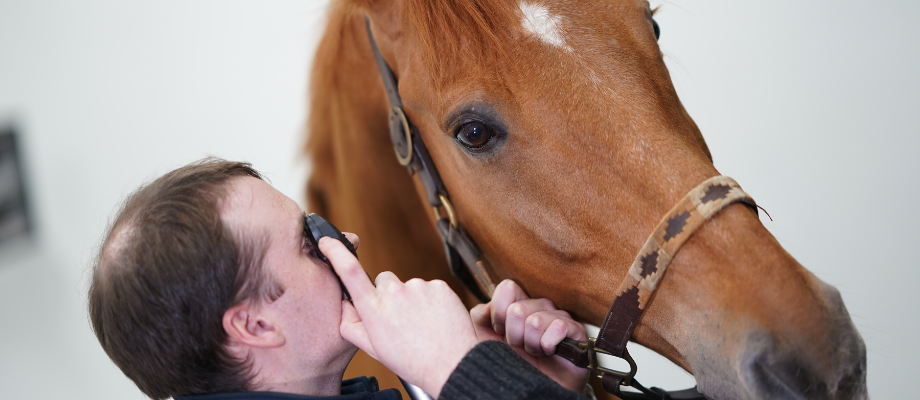
- Thorough eye exam
- Oral examination with gag*
- Weight & condition
- Walk & trot the horse in a straight line to observe movement
- Worming discussion
- Current medication/on going treatment
- Summary of the horses general health & well-being
- A photo of your horse can be taken by your vet for our records if you wish
During the time with your horse the vet will perform a structured examination including an extensive range of checks. A copy of the vets completed worksheet will be provided at the end of your appointment.
Appointment time approx. 45mins
What discounted services are available on the day?
After your horse’s health check is complete, if any of the following services are required you qualify for our offer prices on these selected services:
- ACTH bloods (testing for PPID Cushings Disease)
- EMS bloods (testing for Equine Metabolic Syndrome)
- Haematology & Biochemistry (routine health screen)
- Dental with or without sedation* (routine tooth rasp)
*As part of the health check, if following the oral examination your horse requires a routine dental rasp this can be booked at the reduced offer price with no additional visit fee but must be undertaken within 2 weeks of the initial appointment. On occasions when the vet has the extended time and necessary equipment it can be performed on the day.
Contact us today to ask your vet about your horses next Health Check

Understanding the natural behaviours of cats
Cats don’t just provide companionship; they also have interesting natural behaviours they need to exercise. In this article, we’ll take a look at the five most common natural behaviours of cats and why understanding them is so important.
Cats love to hunt at dusk & dawn
But should you let them?
Cats are natural hunters. Even domesticated cats have an instinct to hunt. This is why they often chase small animals, such as mice, birds, and insects. Cats also love to play with their prey, even if it isn’t something they actually want to eat. This is bad news for wildlife and Conservationists are calling for cats to be put on a curfew.
Read on the BBC – Wildlife experts want a curfew for cats to protect bats
A cat’s desire to hunt is linked to our second behaviour fact … that cats are crepuscular, which means they are most active during twilight in the early evening and at dawn.
You can encourage your outdoor cat to spend more time indoors by playing with ‘prey-driven’ toys – like a toy on a stick or piece of string – during the early evening, as well as feeding them earlier. If your cat seems stressed and wants to go out though, you should let them out.
According to our veterinary team, whilst they love to hunt & play outside, statistically, indoor cats live a lot longer than outdoor cats. This means it’s worth understanding that if you have an indoor cat, you should provide enrichment that allows them to exhibit their crepuscular hunting behaviour, such as the toys mentioned above.
Is your cat clean, curious & social?
Cats are very clean animals. They spend a lot of time grooming themselves, and they will even clean their owners if you allow it. This is because cats have scent glands that release pheromones that other cats can recognise. By grooming themselves, cats are able to keep their scent in check.
Cats are also very curious. They are always on the lookout for new things to explore and play with. This is why they love boxes and hiding places. They also love to climb and explore high places, such as shelves and windowsills. If you have an indoor cat, do make sure you give them plenty of places to explore around the house.
Finally, most cats are very social. They like to be around people and other cats, and they will often form strong bonds with their owners. Cats also like to communicate with humans through meowing and body language so make sure you find time to play with them every day. Some cats, however, prefer to avoid other cats…
More understanding means happier cats
Cats are amazing pets with unique natural behaviours. Understanding why cats from your local area do what they do is one of the keys to being able to provide the best possible home for your feline friend.
Is your cat a clean, curious & social crepuscular hunter? Or do they exhibit other behaviours that are not on our list? Please do share your cat behaviour experiences with your vet on your next routine visit.

Worried your dog is constipated? Our veterinary team has this advice
Having a constipated dog can be stressful and worrying. No-one wants to see their best friend in pain or discomfort. Below, our veterinary offers a few simple steps you might consider taking to understand, treat, and help prevent constipation in your dog.
However, if you are worried and you think your dog is constipated, you should contact our veterinary team for advice.
Blow are three elements that are common to the causes, treatments, and preventative measures you’ll need to take to help a constipated dog.
- Water and hydration
- Exercise and movement
- Diet and things they eat but should not
What are the most common causes of constipation in dogs?
If you’ve ruled out a foreign object potentially blocking the digestive tract, our vets recommend looking to the common causes of constipation:
- Dehydration – Does your dog have easy access to fresh, clean water? If your pet is not drinking water on their own, try adding some to their food bowl. This will encourage your dog to get hydrated and should help to soften the stool.
- Exercise – Is your dog getting enough exercise? If they are not walked regularly and given plenty of chances to poo, you may want to review their routine.
- Diet – Is your dog getting a diet with an adequate amount of fibre in it? As with humans, a lack of fibre in the diet will make pooing more difficult.
How can I treat my constipated dog?
Our veterinary team advises that you should make sure your dog drinks a good amount of water and goes for some long walks. If you don’t do this already, try adding a small amount of wet dog food to their next meal for added hydration.
If you bring your dog into our surgery for a check-up, we may suggest that you add a probiotic to their diet. These help to maintain a healthy balance of good bacteria in the gut. You could try giving your pup a warm bath to help relax their muscles – this can help to relieve the pain and discomfort associated with constipation.
Please Do Not … give an enema, milk, or any laxatives unless prescribed by a vet.
How can I prevent my dog from becoming constipated?
Constipation can affect all types of dogs, but it can usually be avoided by focussing on the elements we mentioned above. Make sure your dog has: plenty of water, regular exercise, and a balanced and appropriate diet. Then, if the problem persists, contact us. We may suggest additional treatments, medications, or supplements, to help relieve your pup’s condition. In the meantime, if you are worried and you think your dog is constipated, please call us to get further advice.

80% of cats in Northamptonshire will suffer from gum disease by the age of three
It’s a sad fact that four out of five cats in the Northamptonshire area will likely have gum disease by the age of three. Which means that if you have a cat, you should act now to give them the best possible chance of getting into the 20% that have no oral issues. If you’re not sure whether your cat has had a dental check-up in the last 12 months and you have any concerns please call our team for advice.
Our veterinary team believe its important to catch dental problems early because advanced dental disease is unpleasant for your cat and can lead to other health issues. As it’s pet dental health month, we’re sharing a few simple steps you can take to prevent problems from arising and give yourself peace of mind.
How to protect your cat’s teeth between vet checks
1. Check your cat’s teeth regularly
You should examine your cat’s teeth regularly. Get them used to being checked and you’ll minimise the chances of being bitten or clawed. Look out for any of the below:
- Painful, red, swollen or bleeding gums
- Gums that have receded
- Lumps on the gums
- Yellow material on the teeth (plaque)
- Hard, brown material between the gums and the base of the teeth (tartar)
- Loose, broken, or missing teeth
2. Learn the signs of early dental problems in cats
Always keep a careful eye on your cat’s behaviour and look out for the early signs of dental problems:
- Bad breath
- Reduced appetite
- Discomfort when eating
- Weight loss
- Poor coat condition
- Pawing at the mouth
- Drooling
3. Prevention of cat teeth problems
As with oral health in humans, we all know that prevention is better than cure. Here’s what our veterinary team recommends you should be doing on a regular basis:
- Brush your cat’s teeth – If you’ve never done this before one of our friendly vet nurses can show you how.
- Pay attention to your cat’s diet – Special dental diets are available for cats with oral issues.
- Consider using dental treats and chews – we can advise further on your next visit.
If you need any help or advice, or would like us to check your cats teeth call our team.

Get advice from Towcester Veterinary Centre’s nurses on rabbit enrichment
Is your rabbit a truly happy bunny? There are many ways in which you can provide added stimulation to really enrich your pet’s environment, which is why our head nurse at Towcester Veterinary Centre has put together these top tips.
If you still have questions about how you can improve your rabbit’s life or have concerns and would like to book a check-up at our Burcote Road surgery – remember you can always talk to us.
Top five life-enhancing tips for rabbits
1. Stimulating your rabbit’s mind
Rabbits need stimulation and the ability to express natural behaviours to stop boredom or stress setting in. Plastic tubing and cardboard rolls make great tunnels, while containers of soil allow them to practise their digging skills. We’d love to see your creations so please do post your photos on our Facebook page!
2. The perfect companion
Pet rabbits should always be kept in pairs, if possible, but if you have concerns about a pair leading to lots of little ones, please talk to us about neutering. It’s also important for your rabbit to interact with people from a young age. Familiarity with humans will help your rabbit develop into a confident, friendly adult.
3. A nutritional diet
It is important to feed your rabbit the correct diet to maintain digestive health and avoid dental problems. Their teeth grow continuously so they must chew enough fibre to prevent overgrowth. Feed your rabbit quality pellet food, a variety of fresh vegetables and high-quality hay. If you are unsure how much food your rabbit needs each day, you can bring them to see our vet nurses at Towcester for a weigh-in and to get nutritional advice.
4. A safe and sufficient home
A cosy, safe hutch is the perfect place for your rabbit, or rabbits to sleep, but it should be accompanied by a run that’s big enough to allow them to complete at least three full hops and stand up comfortably. Remember, a hutch is not enough!
5. Chews and toys
Rabbits need to chew to keep their teeth in healthy condition but also as a form of enrichment and stimulation. Providing a range of ‘chewables’ in their environment is essential for both physical and mental health. Things like wooden balls, hanging toys, and even chewable tunnels they can play with are going to give your rabbit hours of fun!
6. Protect your pet
Rabbits should be vaccinated for Myxomatosis and VHD (Viral Haemorrhage Disease) every year. They can also pick up parasites, such as ear mites and fleas, both of which can easily be treated. Grooming your rabbit, cleaning their hutch regularly, and keeping their fur clean and dry is essential to avoiding ‘flystrike’, which is a potentially fatal condition. If you need help with any of this, call us on 01327 350239 to book an appointment.
We offer a full range of veterinary services for our rabbit patients, so if you have any questions or want a check-up you can always book your bunny to see one of our veterinary team, and we’ll help keep your pet in the best of health.

Cats and cars – Vital winter safety advice
Winter can be a dangerous time for cats, especially when it comes to cars. We have some vital advice for cat owners on how to keep their cats safe this season.
To help you and your cat further, we’ve got a handy image you can share on your social media pages below, or you can download here:
Download and share our cats & cars safety image
We’d love it if you could tag us in your post!
Car winter warmers
When it’s cold outside, cats will instinctively find somewhere warm to take shelter. If that’s outside, your cat may head for a car.
Cats are often attracted to the warmth of a car’s engine and may crawl up under the bonnet to take shelter from the cold. This can be a major problem, as the car’s engine can become very hot when it is running and can cause serious injury (or worse) to your cat. To prevent this from happening, it is important to check your car’s engine before starting it, especially on cold winter days. Make sure to look under the bonnet and around the front of the car and tap on the bonnet to alert any cats that may be hiding there. You should also make sure to keep your car’s bonnet secured, as cats may be able to open it if it’s not properly latched.
To help you spread this important message, you can share our winter cat safety advice for drivers image on Facebook, Instagram or Twitter – remember to tag Towcester Veterinary Centre!
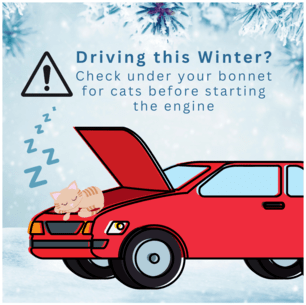
Download a larger version of this image here
Car accidents
Another winter danger for cats in relation to cars is the risk of being hit by a vehicle. Cats are often drawn to roads (and driveways) where they may be at risk of being struck by a passing car. To prevent this from happening, it is important to encourage your cat indoors more during the winter months, especially at night, and try to supervise them when they are outside.
Our Vet advises all cats owners in Northamptonshire to get their cat microchipped as soon as possible. If your cat is microchipped already, are your contact details up to date? It can be upsetting to think about, but the reality is that a microchip may be the only way for our team at Towcester Veterinary Centre, or another vet practice, to contact you if your cat is brought in after an accident.
Contact us to book a cat microchipping appointment.
If you have persuaded your cat to wear a collar, you should keep their identification tags up to date too, in case they do get lost or injured. Overall, winter can be a dangerous time for cats, especially when it comes to cars. To protect your cat, our advice is to check your car’s engine before starting it, keep the bonnet secured, and encourage your cat indoors more or supervise them when they are outside. By taking these precautions, you can help to keep your cat safe and warm during the cold winter months in Northamptonshire.

Towcester Veterinary Centre shares dog grooming advice every owner needs
According to the nursing team at Towcester Veterinary Centre, grooming is great for your dog in many ways. Not only does grooming promote health in a variety of factors, it also helps to strengthen the bond between you and your dog.
Our Burcote Road team have shared the benefits of dog grooming below along with recommendations for different breeds and coat types. Have a read and see how a daily dog grooming routine is well worth your time!
Remember, if you have any queries on grooming, equipment, or your dog’s specific requirements, book an appointment with our vet nurses who can help.
Why should you groom your dog?
Our vet nurses advise that daily grooming will help you keep on top of your dog’s overall health and wellbeing. It will help you spot any areas for potential concern such as suspicious lumps and bumps, bald patches, flaky skin, or sores. You might also spot any pesky fleas or ticks nestled in the fur.
Grooming also promotes skin health; the motion of body brushing helping to increase circulation and promote natural oil production in the skin. This will, in turn, make your dog’s coat much healthier and naturally glossy.
Some long-haired dogs will also be prone to matting, especially after muddy winter walks in Northamptonshire and beyond. Daily grooming helps to remove these as soon as they start to knot, avoiding nasty and sometimes painful clumps.
Which dogs need grooming?
All dogs need grooming, according to our head nurse at Towcester Veterinary Centre!
- Dogs with thick coats benefit from daily brushing as they accumulate a lot of loose, dead hair and are prone to matting and collecting dirt and debris in their coat. Brushing helps to cleanse the coat and keep it healthy.
- Dogs with short, shedding coats such as beagles and dachshunds, won’t need the amount of grooming that a husky would need, but daily attention to their coat is still important for general wellbeing and to help you spot any potential problems.
- Dogs with wire coats like border terriers may not need day-to-day maintenance like other dogs, but regular brushing will help de-matt the fur and remove any debris or dead hairs resting on the skin. A brush made up of thin wires angled away from the skin is best. With these dogs, it’s wise to visit a professional groomer every few months for a hand strip; although they can be clipped, hand stripping is typically a gentle practice and preserves the health and condition of the coat. Our team may have recommendations of dog groomers in Northamptonshire, so do ask us!
- Dogs with wool-like coats such as cockapoos and poodles are often viewed as low maintenance from a grooming perspective because they shed less, if at all. However, these coats can get extremely matted very easily and need daily brushing to remove any slight build-up of knots. These dogs do benefit from professional clipping regularly as well.
- Grooming silky coats, like spaniels, can be tricky as their feathering, chest, and ears need daily brushing to keep matting away and the coat healthy and beautiful. The overall body coat also benefits from daily brushing but can be clipped either at home or professionally.
- Finally, dogs with double coats like retrievers and sheepdogs need daily brushing to keep tangles at bay. The difference with these dogs is that they should not be clipped unless specified by a veterinary professional.
More benefits of dog grooming
As we’ve discussed, there are benefits for all types of coats but it doesn’t stop there. Towcester Veterinary Centre’s nurses also advise that daily grooming helps you check your dog’s teeth, eyes, ears, and paws for any potential issues. You can look for anything lurking in the fur too like fleas and ticks, and you may notice unpleasant smells (usually in the mouth or ears) that indicate a problem.
Plus, research has found that grooming pets can have a calming and de-stressing effect on humans – so, grooming your dog is actually good for your health too!
If, while grooming your dog you come across anything that you think may be cause for concern, please don’t hesitate to call us for advice on 01327 350239 – you can find the rest of our contact details online.
If you would like to know more about grooming techniques and the kit most suited to your dog, our vet nurses at Towcester are always happy to offer suggestions.
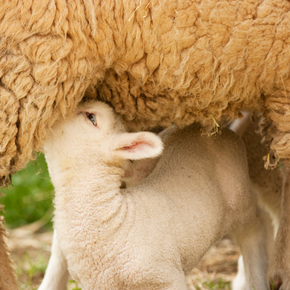
Benchmarking for Beef & Lamb Farmers
With rises in feed, fertiliser, and fuel costs, knowing your cost of production and how your farm enterprises compare with industry is now more important than ever. AHDB Beef and Lamb can help with their Farmbench project!
What is involved?
- An AHDB Regional Knowledge Exchange Manager will visit the farm, collect the information required for Farmbench, and upload it.
- Once the data is uploaded you will receive a detailed report which will highlight the strengths and weaknesses of your business compared to similar operations in the country.
- This enables AHDB to provide cost of production reports which will help inform farmers and influence industry decisions.
For more information or to take part in the project, contact AHDB Knowledge Exchange Manager, Meg Spendlove (meg.spendlove@ahdb.org.uk).

Division of farm accounts
In order to support the farming industry in its mission to show how antibiotics are used across sectors and how their use is reducing, we will be creating different worksheets within farm accounts for different enterprises. This will only impact those farms with multiple species (e.g farms with cattle and sheep). Farms will still only have one account and will still receive one invoice but work and medicines will be seen allocated under the different enterprises on the same invoice. The only change you will really notice is that when you are requesting drugs, we will ask which enterprise you would like them allocated to. We accept that there will be inaccuracies, as an open bottle will be used across the different enterprises, but this data will help us see how and where you use antibiotics. This will help us offer guidance on the challenges different enterprises face.
Please get in touch if you have any questions.

AHDB Medicine Hub
Reminder
Just a reminder for anyone wanting to use the AHDB Medicine Hub, if you’re happy for us to upload on your behalf you only need to click a link on an email and we can do the rest! Please let Els know if you want an email link setting up or would like to know more about the system. We would encourage as many farmers as possible to use Medicine Hub as this will help provide the data to show the improvements in antibiotic use in the beef and sheep industry.