Which Worms Are Dangerous for Dogs
Dogs can be exposed to a variety of worms in Northamptonshire, and while some may cause mild discomfort, others can pose serious health risks. In the article below, our vets at Towcester Vets share the types of worms, how they’re contracted, and why preventing them is key to keeping your dog healthy.
Worms in dogs: what you need to know this spring
Worms that can affect dogs
- Lungworm – One of the most dangerous, lungworm can cause coughing, breathing difficulties, and in severe cases, life-threatening illness. Dogs usually become infected by eating slugs or snails carrying the larvae.
- Roundworms – Common in puppies and adult dogs alike, roundworms live in the intestines and can cause vomiting, diarrhoea, weight loss, and a dull coat.
- Tapeworms – Often contracted from eating infected fleas or small prey, tapeworms can lead to weight loss, itchiness around the tail, and visible segments (like grains of rice) in faeces.
- Hookworms and Whipworms – Less common in the UK, these intestinal parasites feed on blood, potentially causing anaemia, diarrhoea, and general weakness.
How dogs contract worms
Our vets in Towcester explain that worm infections can happen in many ways: through ingesting contaminated faeces, catching infected prey, or contact with slugs, snails, or even infected fleas. Lungworm, in particular, is more common in areas with damp grass or garden ponds where slugs and snails thrive. Even toys or bowls left outside overnight can harbour larvae, putting your dog at risk if they lick or chew them.
Protecting your dog
According to Towcester Vets’ team, preventing worm infections relies on a combination of vigilance and routine care:
- Regular vet-recommended worming treatments – Your vet can recommend a treatment and schedule suited to your dog’s age, lifestyle, and risk factors.
- Environmental hygiene – Don’t leave bowls, toys, or bedding outside overnight. Keep your garden tidy by clearing away leaf litter and garden debris, removing the ‘daytime shelters’ these pests need to survive and thrive near your pets.
- Monitoring and early action – Watch for signs such as vomiting, diarrhoea, coughing, or a change in appetite and seek advice from our vets promptly.
Worms may be small, but their impact can be significant. Preventative care and careful observation can make all the difference.
Book a parasite review with our veterinary team at Towcester Vets today to ensure your dog is fully protected from worms and other hidden pests. Let’s keep them healthy, happy and ready for every walk and adventure in Northamptonshire.

Spring Toolkits
Off the back of our Spring Toolkit Meeting at the end of January, Towcester Farm Vets have put together NEW calving and lambing kits. These kits are available to purchase from us for only £145 (ex VAT). This is more than a 15% discount!
Our Calving Kits contain:
1 x NoBacz Navel, 1 x 10ml Sensiblex, 1 x 50ml Animeloxan, 1 x Calciject, 1 x Magniject,
and 1 x Hydrafast sachet
Our Lambing Kits contain:
1 x NoBacz Navel, 1 x 10ml Sensiblex, 1 x 50ml Animeloxan, and 1 x bottle of Re-Ewe-venate
PLUS a FREE bottle of lube with each kit purchased!
Please give us a call to order!

Lambing Club
Following its continued success, we will be running our Lambing Club scheme again this year.
Our Lambing Club involves an annual subscription fee which gives you access to discounted rates for both lambings and caesareans. For an initial cost of £200 we will conduct a lambing for just £30 and a caesarean for £75 including all drugs. The same discounts apply whether we visit the farm (standard visit rate applies) or, to further reduce the costs, ewes can be brought into our Burcote Road surgery.
We have found that this arrangement is not only cost effective for participating clients, but has also resulted in ewes being brought to us much earlier, resulting in significantly improved success rates.
To register, or if you would like further information, please contact the practice.
Responsible Use of Medicine Course
It is a Red Tractor requirement to attend a Responsible Use of Medicines Course, but it is also beneficial for anyone administering medicines to animals. The current cost is £50 per person. Everyone is welcome, even if you have attended the course previously but would like a refresher!
We will cover:
- When medicines should be used.
- What medicines should be used.
- How medicines should be administered.
- How medicines should be stored, recorded, and disposed of.
Call today to express your interest and find out when the next course is running.
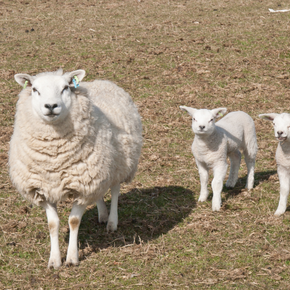
Orf! No!
Orf is caused by a virus meaning antibiotics will not help in its treatment. Sometimes secondary infections may require treatment, but the use of antibiotics could be reduced by using a topical gel barrier.
NoBacz have produced a gel called Ambugreen which forms a barrier over the site where it is applied. The product starts as a viscous gel making it very easy to spread over lesions. It provides an instant waterproof layer which gradually hardens forming a flexible and protective coating.
This gel is non colonising meaning it produces a coating over the lesions which bacteria cannot invade therefore reducing secondary infections. The physical barrier will also reduce the shedding of dried scabs, which contain millions of virus particles, into the environment therefore reducing the transmission of disease between lambs/sheep.
Ambugreen is incredibly versatile and can be used on farm for conditions other than orf including:
- Udder Cleft Dermatitis (UCD): a chronic painful condition in dairy cattle
- Lameness and Digital Dermatitis
- Disbudding Sites
- Surgical Sites
PLEASE ALWAYS WEAR GLOVES WHEN APPLYING AMBUGREEN AND WHEN DEALING WITH SHEEP WITH ORF

Why check the suck reflex?
Hopefully you are all convinced that good colostrum intake gives all newborns the best start.
A Canadian study focusing on suckler farms has provided interesting data on a very simple on farm check that can predict calves at risk of poor colostrum intakes. The study showed that checking the suck reflex at birth was a useful way to predict likelihood of reduced colostrum intake. Even calves born with no assistance, but with a poor suck reflex showed much greater risk of reduced colostrum intakes at 4 hrs of age.
It is important to note that 78% of unassisted calves had a poor suck reflex – demonstrating nicely that an unassisted calving is not necessarily an easy calving for the calf!
Checking the suck reflex in all calves born then ensuring supplementation with dams own or powdered colostrum when required will help boost calf health and growth rates.
If you would like any guidance on tube feeding calves, please ask next time we are on farm.
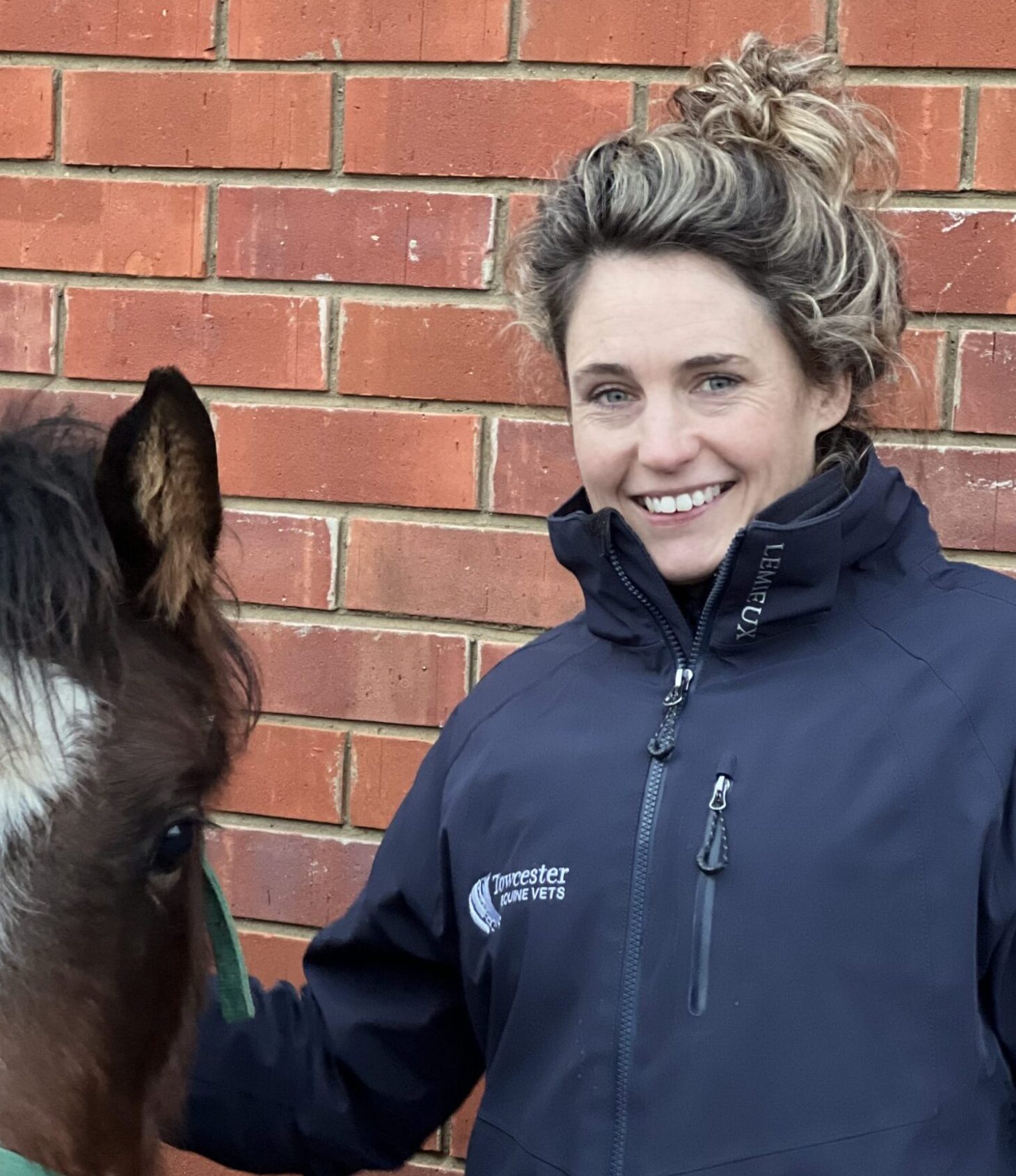
Let’s talk worming foals & youngstock
Lead Reproductive Veterinary Surgeon Gemma Kirk BVetMed MRCVS has produced this useful Q&A for breeders wishing to follow best practice when it comes to worming.
Gemma graduated from the Royal Veterinary College in 2008 and has been involved in equine practice ever since. As a new graduate she worked for a branch of Minster Equine Clinic in Yorkshire. She then undertook an internship at Arundel
Equine Hospital in West Sussex where she looked after inpatients, carried out anaesthesia and was involved in lameness investigations and diagnostic imaging. Upon completion of her internship, she stayed at Arundel initially as a hospital/lameness assistant and latterly as part of the ambulatory and stud team.
Gemma spent four years dividing her time between Northern and Southern Hemisphere stud seasons as a resident vet at Vinery Stud, Australia. Vinery is a large Thoroughbred farm that is home to around 300 horses with 150-200 mares being bred each season and 150-200 foals arriving every year. Time spent here served as a valuable experience in all areas of equine reproduction and foal care.
Gemma has been with us at Towcester Equine Vets since March 2016 and is our lead breeding vet; however, having been practising for the last seventeen years, she is also a very valuable asset in all areas of the practice.
Stud worming advice Q&A
Q. Do we need to worm foals and young stock?
A. Yes. These are amongst the most at risk and important group of horses to consider when worming.
Q. Why are young stock most at risk?
A. Because foals are born with no innate immunity and have had no time to develop their own immunity against parasites.
Q. What worms are foals most susceptible to?
A. The types of worms that horses are most susceptible can depend on their age and the time of year. Ascarids/ large round worms are the most dangerous/ problematic type of worms for foals. Strongyloides Western (threadworm) can also be an issue causing gastrointestinal disease/ diarrhoea in younger foals.
Q. Why are Ascarids so dangerous in foals?
A. Insufficient knowledge, inappropriate/ insufficient worming protocols, development of concerning levels of resistance to wormers and poor paddock management all increase risk of ascarid infection.
Q. What signs may a foal with an ascarid burden display?
A. Normal signs of parasite burdens such as poor growth rates, poor coat and or loose faeces/ diarrhoea.
Due the extraordinary life cycle of Ascarids, with the larval stages migrating for the intestine to the liver, into the circulation and then into the lungs before being swallowed and re-entering the gut to mature further, they can cause respiratory signs as well as gastrointestinal signs. Respiratory signs displayed include a nasal discharge, cough and elevated breathing rate. Very high burdens can cause colic and in the most severe of cases can be so numerous that they completely occlude the small intestine. That can be fatal without surgical intervention.
Q. What can be done to reduce the risk to foals and young stock?
A. Good pasture management. Adopt appropriate worming protocols for the premises, seek veterinary advice when needing guidance.
Manage paddocks to reduce the worm burden, including poo picking, saving the ‘cleanest’ paddocks for foals, avoiding turning foals out in paddocks that foals/ young horses have inhabited previously (as young horses are more likely to shed/ burden the pasture) and consider resting paddocks or grazing with ruminants to reduce the worm burden on the pasture. Consider rotating wormers if resistance is suspected, the yards has high stocking densities or horses have been on the land for many years.
In summary…what is an ideal worming protocol? Protocols vary dependant on the premises, stocking density and management. Seak veterinary advice for a tailored worming protocol specific to a premises.
Best practice guidelines are listed below:
-Manage pastures as advised above to reduce exposure to high worm burdens and resistant worms.
– Ideally worm individual foals based on faecal egg counts (FEC’s), the threshold is lower in foals and generally foals with an worm egg count of around 150 eggs per gram (EPG) or higher require worming.
– If performing individual WECs is not possible a protocol of treating foals from 8 weeks of age and repeating treatment ~ every 8 weeks is advised.
– Consider rotating the product used on each occasion to account for resistance. Ideally start with a single dose of fenbendazole (Panacur) then pyrantel then ivermectin.
– Take care using products that cause paralysis of worms (pyrantel) if high ascarid burdens are suspected.
– Treat for tapeworm in the autumn (double dose pyrantel, praziquantel or a combined praziquantel product).
– Treat for cyathastomes (with Equest/ Equest Pramox) in winter and when greater than 6.5 months of age.
– Consider faecal egg count reduction tests (FECRTs), so taking a WEC pre and post worming, if resistance if suspected.
– Always seek veterinary assistance if concerned.
Special considerations for different products when treating foals:
– Fenbendazole (panacur) and ivermectin products can be used safely in foals, even from a young age.
– Pyrantel can be used safely from 4 weeks.
– Moxidectin/ Equest can be used safely from 4 months.
– Combined products, Equest Pramox can be used safely from 6.5 months.
If you wish to discuss worming your youngstock or any of our Breeding Services at Towcester Equine Vets please reach out to Gemma at your nearest clinic.
Onley (CV23 8AJ) 01788 523000
Towcester (NN12 6LQ) 01327 811007

The Thoroughbred Package
Do you own a Thoroughbred?
Or an ex racehorse perhaps?
The transition from racing looks different for every horse – some have had long careers, some have only trained.
Our team at Towcester Equine Vets understand the challenges that people face when taking on an ex racehorse beginning their next chapter.
This NEW package offer has been carefully designed to provide a comprehensive clinical assessment; the holistic approach ensures your horse’s comfort and well-being will always be the priority. This pack is suitable for all Thoroughbreds at any stage of training – either at the start before ridden work or if you are finding training concerns, whether your aim with your horse is to enjoy hacking around the countryside, riding club activities, competing to a high level or you’re just not sure what the future may bring yet?
This diagnostic package focuses on the areas most commonly influencing long-term comfort, soundness, and performance of the Thoroughbred horse –
- Gastroscopy: to identify gastric ulceration
- Back Radiography: detailed imaging to evaluate the thoracic dorsal spinous processes
- Foot Balance Radiography: assessment of foot balance to assist farriery and future management
- Nutritional Consultation: partnering with Dengie Horse Feeds to optimise a diet for your horse
The findings from your horse’s assessment allow us to:
* Identify any underlying concerns early
* Optimise comfort and performance
* Support informed training and management decisions
* Provide tailored veterinary guidance for the next phase of their career
* Help develop your home team
Offer Price
£550 inc VAT Diagnostic Package performed at either of our equine clinic locations (NN12 6LQ or CV23 8AJ)
or
£600 inc VAT Diagnostic Package performed at your yard (this price includes a visit to your yard within 20 miles of either of our equine clinic locations)
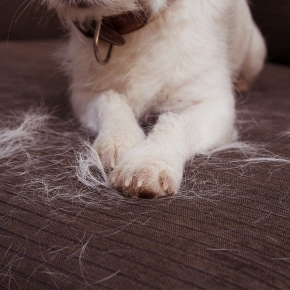
Spot the Signs of Spring Moulting vs Pet Skin Problems
As the seasons change in Northamptonshire, many pets shed their coats to adjust to warmer or cooler weather. While moulting is completely normal, it can sometimes be mistaken for — or mask — an underlying skin problem. Knowing what’s typical for your pet, and what isn’t, can help you act early if something’s not quite right.
In this article, our veterinary team at Towcester Vets explain how the signs of moulting and skin issues differ in dogs, cats and rabbits. Concerned about a possible skin problem? Book an appointment with our vets in Towcester.
Spotting the signs of seasonal moulting vs skin trouble
Dogs
Our vets at Towcester Vets explain that dogs often moult heavily in spring and autumn, particularly double-coated breeds. Normal moulting tends to be even across the body, with no redness or discomfort. Skin trouble, however, usually comes with persistent scratching, chewing, licking or sore patches, especially on the paws, ears, belly or face. Allergies, parasites and infections are common causes, and dogs will often make their irritation very obvious.
Cats
Cats also shed seasonally, though often more subtly. Our vets in Towcester advise that you may notice more fur on furniture or during grooming. Unlike dogs, cats are excellent at hiding discomfort. Signs of skin issues may include over-grooming, hair loss, scabs around the neck or base of the tail, or changes in behaviour. Allergic skin disease and flea reactions are common triggers, even if you never see a flea.
Rabbits
Rabbits moult in stages rather than all at once, sometimes leaving patchy areas of loose fur. Normal moulting shouldn’t cause itching or sore skin. If you notice redness, flaky skin, hair loss, excessive scratching, or crusts, this could point to mites, infection or environmental irritation. Because rabbits have delicate skin, problems can progress quickly without treatment.
When to seek advice
If your pet’s coat change is accompanied by itching, redness, scabs or hair loss, it’s time to have them checked. Skin conditions are often easier to manage when caught early, helping to keep your pet comfortable and prevent ongoing irritation.
Call us on 01327 350239 if you spot any issues. Seasonal moulting is a natural process, but skin trouble is not something your pet should have to live with.
Is your pet scratching? Book a skin assessment with our veterinary team at Towcester Vets and let us help keep their coat and skin healthy, comfortable, and trouble-free.
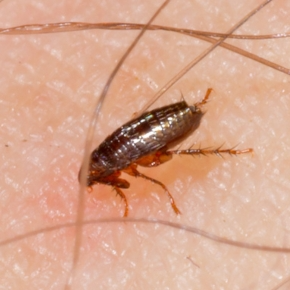
Read Towcester Veterinary Centre’s Guide to The Real “March Flea Spike”
Many pet owners relax on flea treatments during the winter months, assuming the colder weather keeps these pests at bay. While it’s true that adult fleas are less active in chilly conditions, the hidden stages of the flea life cycle can quietly survive in your home, and March is when they start to make their presence known in Northamptonshire.
Read Towcester Veterinary Centre’s guide to flea cycles and protecting your pet and home below.
Don’t get caught out by a spring flea surge. Book a parasite review to ensure your home and loved ones stay protected as the weather shifts.
Understanding flea life cycles this spring
Towcester Vets’ team explains that fleas go through four stages: egg, larva, pupa and adult. The pupae are particularly hardy, able to remain dormant in carpets, skirting boards, floorboard cracks, bedding and upholstery for several months. Flea larvae hate light and crawl deep into dark crevices, which is why just washing the bedding often isn’t enough to stop a spring surge.
Even if your pet hasn’t shown signs of fleas during the winter, these pupae are waiting for the right conditions – warmth, movement and humidity – to emerge. As the days lengthen and spring approaches, these dormant fleas hatch, often all at once, leading to sudden infestations that can catch families by surprise.
Once fleas are active, they can quickly reproduce on your pets, causing itching, irritation, and in some cases, allergic reactions or secondary skin infections. Fleas also pose a risk of transmitting tapeworms and other parasites, and in rabbits, increase the risk of spreading serious diseases like Myxomatosis. This makes early prevention and vigilance vital, even as the weather just starts to warm in Northamptonshire.
Protecting your pets and home
To stay ahead of a spring flea surge, our vets in Towcester advise maintaining regular flea preventatives on dogs and cats, ideally all year round. Check bedding, carpets and soft furnishings for signs of fleas and clean regularly. Flea combs are useful for spotting adult fleas early, and prompt treatment of your pets helps prevent the problem from escalating.
Our team at Towcester Vets can recommend the right preventatives, show you how to spot early signs, and provide advice tailored to your pet’s lifestyle. It is vital to remember that flea treatments differ for each species and should not be shared. Then you can reorder your pet’s flea medication via our website going forward.
Book a parasite review with us — early action now can save both you and your pet a lot of irritation later, keeping your home in Northamptonshire flea-free and your furry friends comfortable as spring arrives.