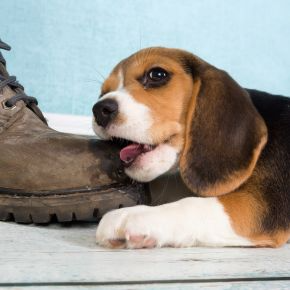
Towcester Vets’ Nurses Answer: Why Dogs Chew
May 12, 2025


As a dog owner in Northamptonshire you may have found yourself wondering when your puppy or adult dog will stop chewing everything in sight – from shoes to furniture to even your favourite socks! Chewing is a perfectly natural behaviour for dogs, but the question is: when does it stop?
If you’re struggling with your dog’s chewing habits, Towcester Vets’ nurses are here to help! Contact us today for advice on how to manage this common behaviour and ensure your pup’s wellbeing.
When will my puppy or adult dog stop chewing?
Puppies: teething and exploration
Towcester Vets’ nurses explain that puppies, just like human babies, go through a teething phase. This typically occurs between 3 to 6 months of age, when their baby teeth fall out and are replaced by adult teeth. During this time, puppies chew on things to relieve discomfort and to explore their world. Chewing helps them understand their environment, too – it’s an important part of their development.
While the teething phase is temporary, it can feel like a never-ending battle to protect your belongings. However, with patience, appropriate chew toys, and consistent redirection, this stage will pass. By around 6 months, your puppy’s adult teeth will have come through, and they should begin to settle down a bit.
Adult dogs: a different motivation
Our veterinary nurses in Towcester advise that for adult dogs, chewing can be a sign of boredom, anxiety, or simply a way to expend energy. If your dog hasn’t been taught what’s appropriate to chew, they may continue to chew on furniture, shoes, or even walls. This behaviour may persist for several years if not properly addressed.
It’s important to note that some dogs are naturally more inclined to chew than others, particularly breeds with a high energy level or strong prey drive. Chewing is also a way to relieve stress, so if your dog is anxious, they may chew more to self-soothe.
When to seek help
If your dog’s chewing is excessive or destructive, it’s a good idea to assess their environment and needs. Are they getting enough physical exercise in Northamptonshire and mental stimulation? Are they feeling stressed or anxious? In some cases, chewing can be a sign of an underlying health issue, like dental problems, so it’s always worth discussing with one of Towcester Vets’ veterinary surgeons.
If you’re struggling with your dog’s chewing habits, our nurses at Towcester Vets are here to help! Contact us today for advice on how to manage this common behaviour and ensure your pup’s wellbeing.
Coming home to discover that your puppy has just chewed an expensive new pair of shoes can make you question the wisdom of getting a dog. But learning why dogs chew can go a long way to reducing the risk that more of your belongings will end up tattered and dog-eared. You can do this by contacting Towcester Vets’ nurses for further guidance and support tailored to your dog’s needs!