Our Vets in Northamptonshire Offer Advice on Overgrooming in Cats
May 19, 2025


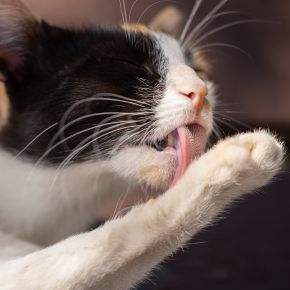
Cats are naturally clean animals, spending a good portion of their day grooming. However, if your cat is scratching excessively or overgrooming to the point of fur loss or skin irritation, there may be an underlying issue that needs attention.
Our vets at Towcester Vets share some of the key reasons for scratching and when cat owners in Northamptonshire should seek veterinary advice from our team. If you’re concerned about your cat, reach out and book an appointment to chat and get your cat checked over.
Cat excessively scratching or overgrooming?
Excessive grooming and scratching in cats are commonly encountered behavioural signs that may indicate an underlying medical or psychological issue. While grooming is a normal and healthy activity for felines, our vets warn that over-grooming – to the point of hair loss, skin irritation, or the development of lesions should be discussed with our team at Towcester Vets.
There are several factors that can cause cats to groom excessively, including:
- Fleas and parasites – Although most commonly a problem for outdoor cats, even indoor cats can occasionally pick up fleas, leading to intense itching and excessive grooming.
- Allergies – Cats can develop allergies to food, pollen, dust mites, or even certain fabrics and cleaning products.
- Skin conditions – Bacterial or fungal infections can cause discomfort and excessive licking or scratching.
- Pain or discomfort – Cats may overgroom a specific area if they have an injury, arthritis, or another underlying health problem.
- Stress and anxiety – Changes in the home, new pets, or even boredom can lead to compulsive grooming as a coping mechanism.
In many cats it is a combination of factors acting at the same time that triggers the signs.
Cats are highly sensitive creatures and for a few, over-grooming may be a manifestation of stress, anxiety, or boredom alone. This is often referred to as psychogenic alopecia and is typically diagnosed when our vets in Towcester have ruled out all other causes of skin irritation. Early intervention is key, as chronic self-trauma can lead to secondary infections and persistent discomfort.
If you notice any of the following, it’s time to seek veterinary advice from our team at Towcester Vets:
- Bald patches or thinning fur
- Red, inflamed, or scabby skin
- Excessive licking, biting, or scratching
- Increased hairballs due to swallowed fur
- Changes in behaviour, such as hiding or irritability
A veterinary check-up at Towcester Vets can help determine the cause of your cat’s excessive grooming. We may recommend flea treatments, allergy management, skin treatments, or stress-reducing strategies tailored to your cat’s needs.